Description
How to Fabricate Folded Expanded Aluminum Mesh Panels
Expanded aluminum mesh is widely used in architectural facades, decorative screens, sunshade systems, and interior design applications. While standard expanded mesh panels are generally supplied in flat sheets, some architectural projects require folded panels to achieve specific shapes, improve installation conditions, or create three-dimensional facade effects.
Fabricating folded expanded aluminum mesh panels requires careful consideration of the mesh structure, aluminum thickness, folding position, and fabrication sequence. Unlike solid aluminum sheets, expanded mesh contains interconnected strands and openings, which makes the folding process more complicated.
Understanding these manufacturing considerations helps architects, facade contractors, and project buyers determine whether a particular folded design can be produced successfully.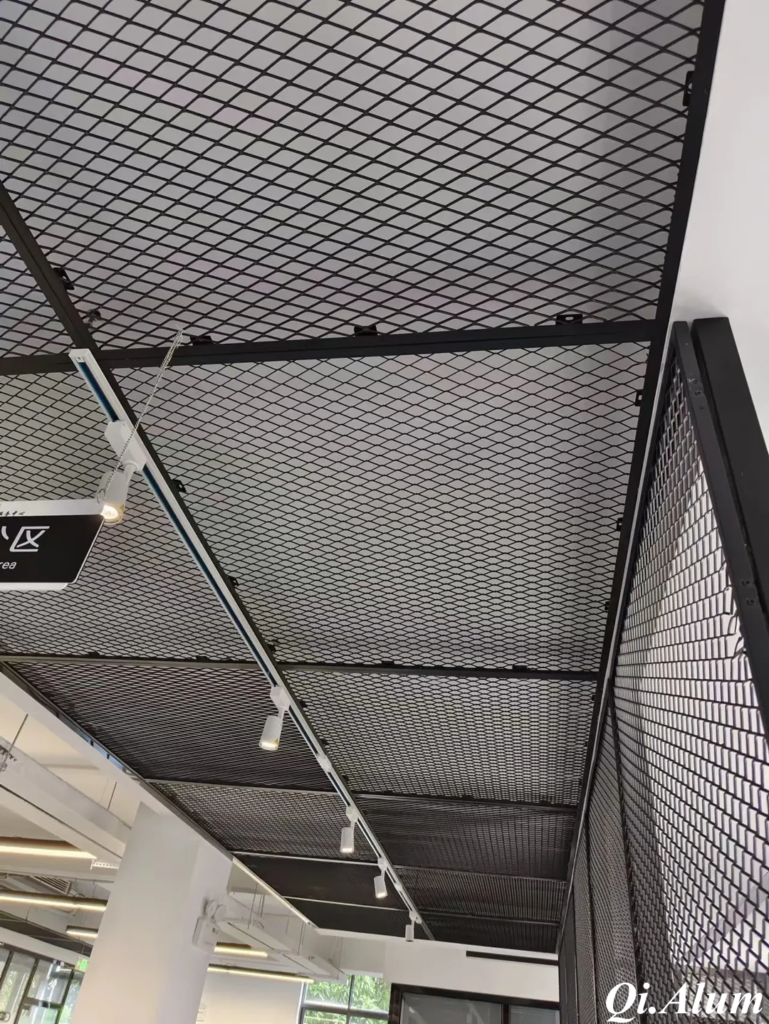
1. What Are Folded Expanded Aluminum Mesh Panels?
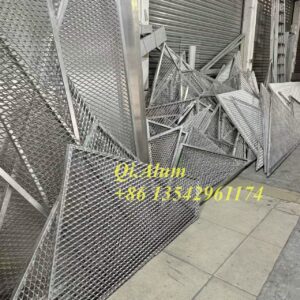
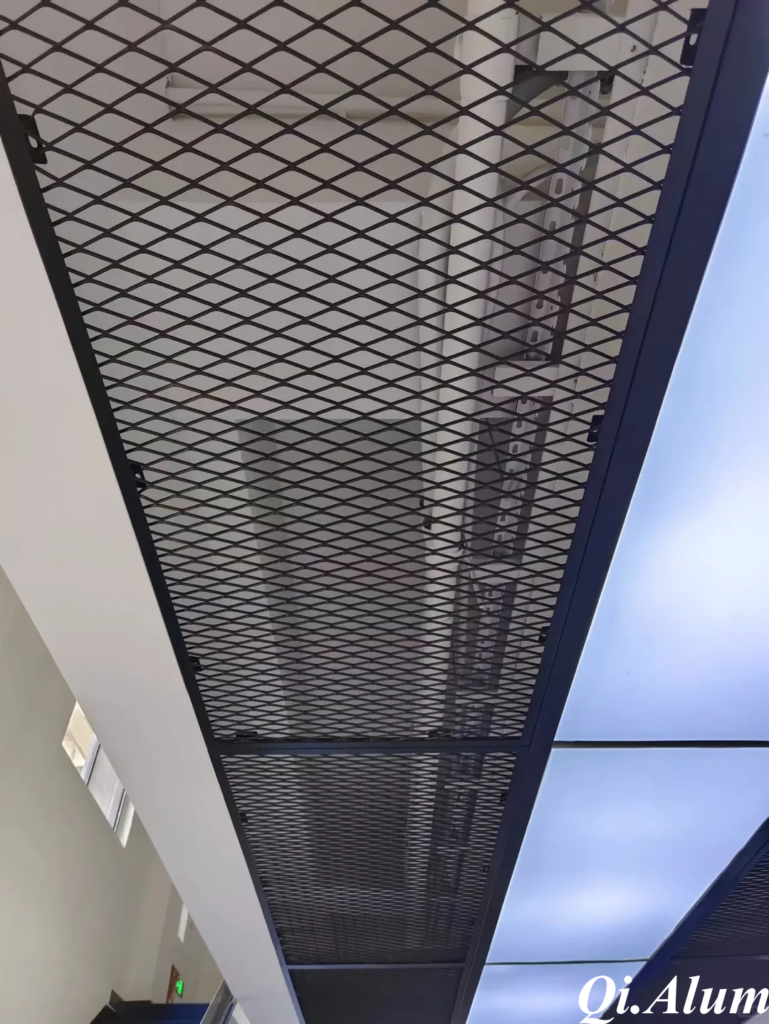
Folded expanded aluminum mesh panels are aluminum mesh sheets that have been formed along one or more edges or designated sections to create an angled or three-dimensional profile.
Instead of remaining completely flat, the panels can be fabricated into different configurations, including:
- Single-folded edge panels.
- Double-folded mesh panels.
- L-shaped expanded mesh panels.
- U-shaped expanded mesh panels.
- Angled facade panels.
- Special-shaped architectural mesh components.
These configurations can be used to create stronger panel boundaries, conceal fixing components, improve installation connections, or achieve specific architectural appearances.
The final shape depends on the original mesh specifications and the limitations of the forming process.
2. Select Suitable Expanded Mesh Specifications Before Folding
Material selection is the first important step in manufacturing folded expanded aluminum mesh panels.
Not every expanded mesh specification is suitable for folding. The interconnected strands and openings may respond differently to bending forces depending on their dimensions and orientation.
Several factors should be reviewed before production.
Aluminum Thickness
The thickness of the original aluminum sheet affects its forming behavior and resistance to deformation. Thicker materials may require greater forming force, while thinner materials may be more susceptible to local distortion.
Strand Width and Thickness
The width and thickness of the expanded metal strands influence the rigidity of the mesh structure. Narrow strands and small connecting areas may require additional attention during folding.
Mesh Opening Dimensions
Large openings can create different stress distributions compared with smaller openings. The position of the fold should be evaluated in relation to the mesh pattern.
Aluminum Alloy
Common architectural aluminum alloys include 3003, 5052, and other suitable grades. Their forming characteristics vary, so the alloy should be selected according to the required shape and fabrication process.
A sample test is recommended before confirming complicated folding specifications.
3. Determine the Folding Direction and Position
The folding direction is one of the most important considerations when fabricating expanded aluminum mesh panels.
Because expanded mesh has a directional structure, folding parallel to the long strands may produce a different result from folding across them.
The mesh orientation can affect:
- Local deformation around the folding line.
- The appearance of the openings near the bend.
- The consistency of the folded angle.
- The stability of the panel edges.
Before manufacturing, the design drawing should clearly identify the folding line, mesh direction, finished dimensions, and required angle.
For panels with multiple folds, each folding position should be reviewed to avoid interference between adjacent sections.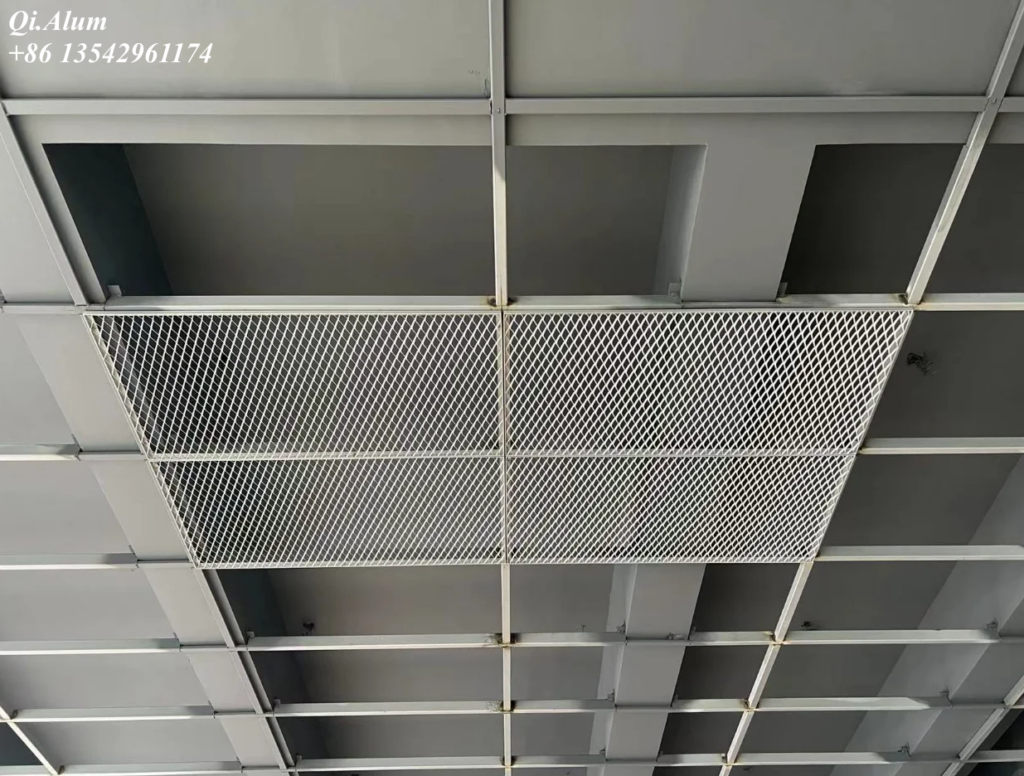
4. Choose the Appropriate Folding Method
The fabrication method depends on the panel specifications, required angle, and overall design.
Press Brake Folding
A press brake can be used for suitable expanded mesh panels to create straight folding lines.
The machine applies controlled pressure along a defined position to form the required angle.
However, expanded aluminum mesh does not behave exactly like a solid aluminum sheet. The openings may deform during forming, and the contact between the tooling and individual strands needs to be considered.
Tooling selection and trial production are important for achieving consistent results.
Custom Forming Fixtures
For special-shaped panels or repeated production of the same design, custom forming fixtures may help control the folding position and finished geometry.
Fixtures can improve repeatability and reduce differences between individual panels.
They are particularly useful for projects involving multiple panels with identical folding dimensions.
Manual Adjustment and Secondary Forming
Some complicated designs may require additional manual adjustment after the initial forming process.
This approach can help correct minor dimensional differences, but it should not replace proper tooling design or engineering verification.
For large production quantities, a repeatable forming method is generally preferable.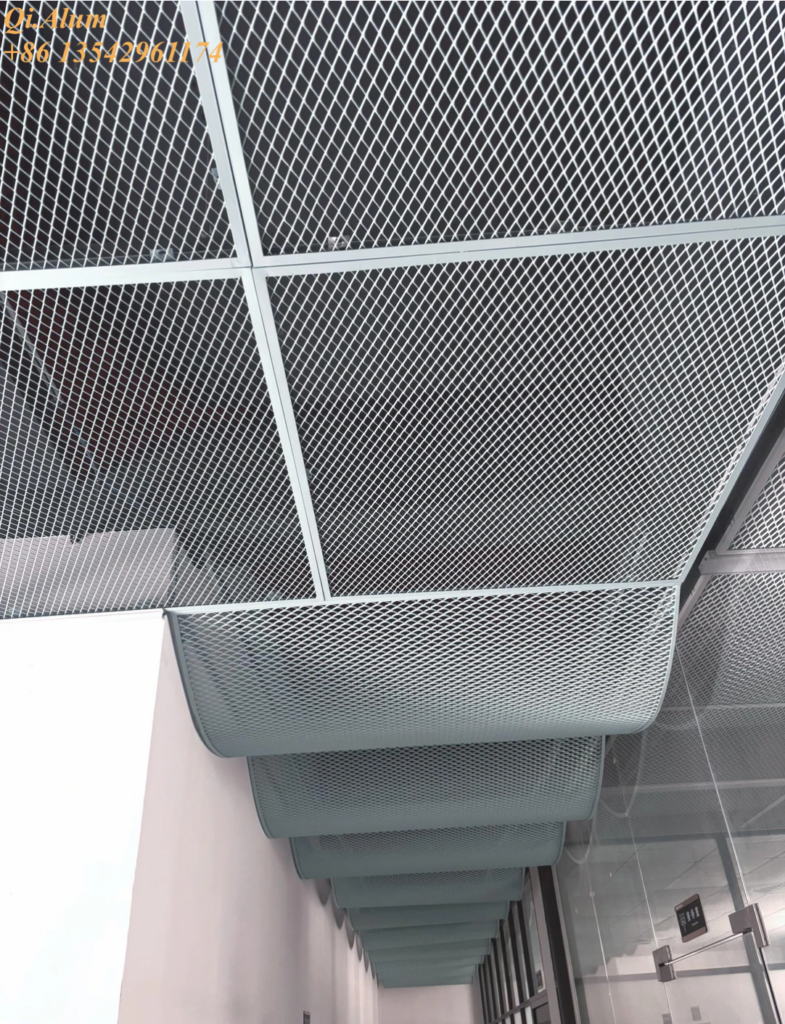
5. How to Control Deformation During Folding
Deformation is one of the main challenges in producing folded expanded aluminum mesh panels.
Unlike solid sheets, the open structure of expanded metal may allow individual strands to move or distort when pressure is applied.
The following measures can help improve fabrication consistency.
Confirm the Folding Line
The folding line should be determined before cutting and forming. Its position must be coordinated with the mesh pattern.
Use Suitable Tooling
The press brake tooling and forming fixtures should match the panel thickness, mesh geometry, and required bending angle.
Control the Forming Pressure
Excessive pressure may damage or distort the strands around the folding area. The forming process should be tested and adjusted according to the material.
Check the Finished Angle
The folding angle should be inspected after forming. Springback and material variation may affect the final angle.
Avoid Unnecessary Repeated Bending
Repeated folding and correction can increase the risk of material damage, especially around interconnected mesh strands.
For complex panels, producing a prototype before mass production is an effective way to evaluate the process.
6. Consider Edge Reinforcement and Structural Connections
Some folded expanded aluminum mesh panels are designed with additional edge reinforcement or supporting components.
For example, a folded edge may provide a connection area for brackets or help create a more defined panel boundary.
Depending on the application, manufacturers may also consider:
- Aluminum flat bar reinforcement.
- Perimeter aluminum frames.
- Additional fixing brackets.
- Reinforced connection points.
- Special edge details.
The reinforcement method should be coordinated with the architectural drawings and supporting structure.
For exterior facade applications, the complete panel assembly must be evaluated for applicable wind loads, fixing forces, and other project-specific requirements.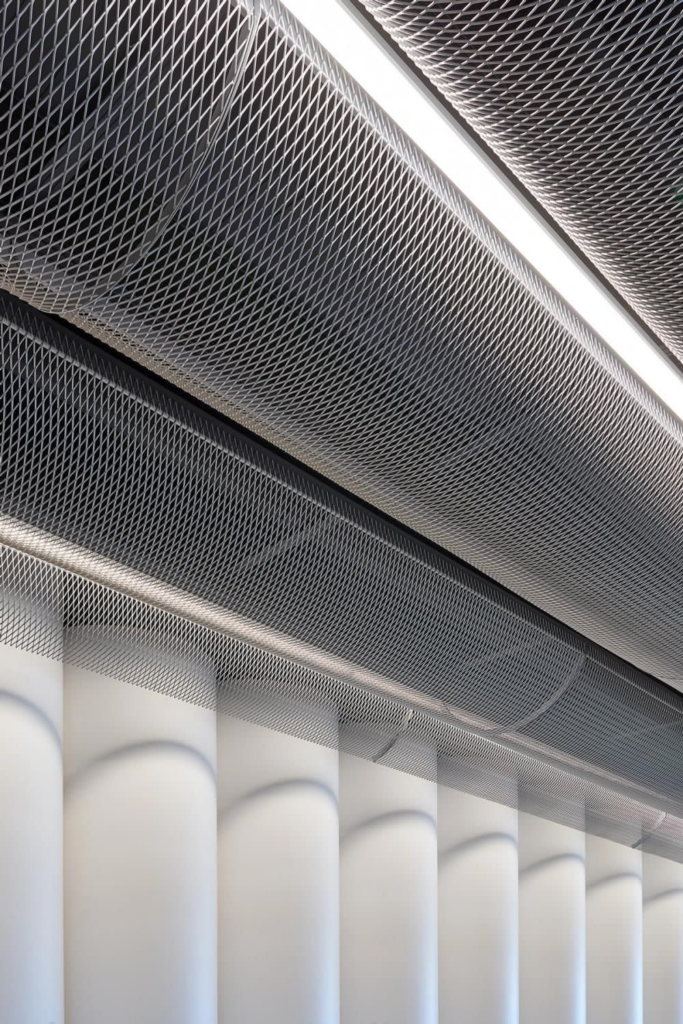
7. Apply Surface Finishing After Fabrication
Surface finishing is another important stage in manufacturing folded expanded aluminum mesh panels.
Powder coating and PVDF coating are commonly used for architectural aluminum products.
In most cases, the fabrication sequence should be planned so that cutting, folding, welding where applicable, and other mechanical operations are completed before the final coating process.
This helps avoid damaging the finished coating during subsequent processing.
Before coating, the manufacturer should inspect:
- Folding angles and panel dimensions.
- Surface scratches and mechanical damage.
- Mesh opening consistency.
- Edge conditions and connection details.
- Overall panel geometry.
For projects requiring specific architectural colors, physical color samples should be confirmed before mass production.
8. What Information Is Needed Before Manufacturing Folded Mesh Panels?
Accurate project information helps manufacturers assess whether the requested folded design is feasible.
When requesting a quotation, buyers should provide the following details:
- Aluminum alloy and material thickness.
- Mesh opening dimensions and strand specifications.
- Overall panel width and height.
- Folding angle and folding position.
- Number of folded edges.
- Mesh orientation.
- Required edge reinforcement.
- Surface treatment and color.
- Panel quantity and application.
- Technical drawings or 3D design files.
For complicated designs, a CAD drawing showing the flat pattern and finished panel dimensions is especially useful.
A physical sample or prototype can also help confirm the folding appearance and fabrication feasibility before production begins.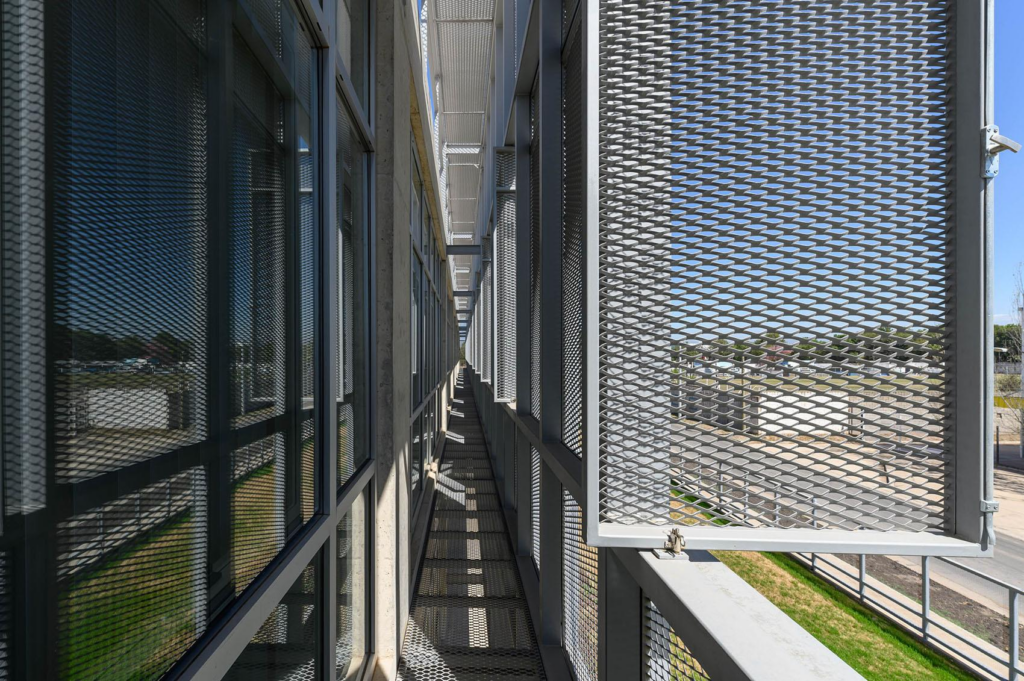
9. Common Applications of Folded Expanded Aluminum Mesh Panels
Folded expanded aluminum mesh panels can be used in different architectural applications.
Architectural Facades
Folded edges can provide defined panel boundaries and help coordinate mesh panels with facade supporting structures.
Decorative Screens
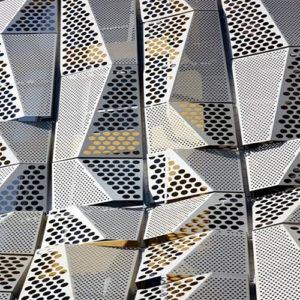
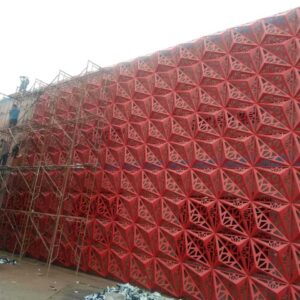
Angled mesh panels can create three-dimensional visual effects for building entrances, balconies, and outdoor screening systems.
Sunshade Systems
Folded configurations can help create projecting or angled shading elements, depending on the architectural design.
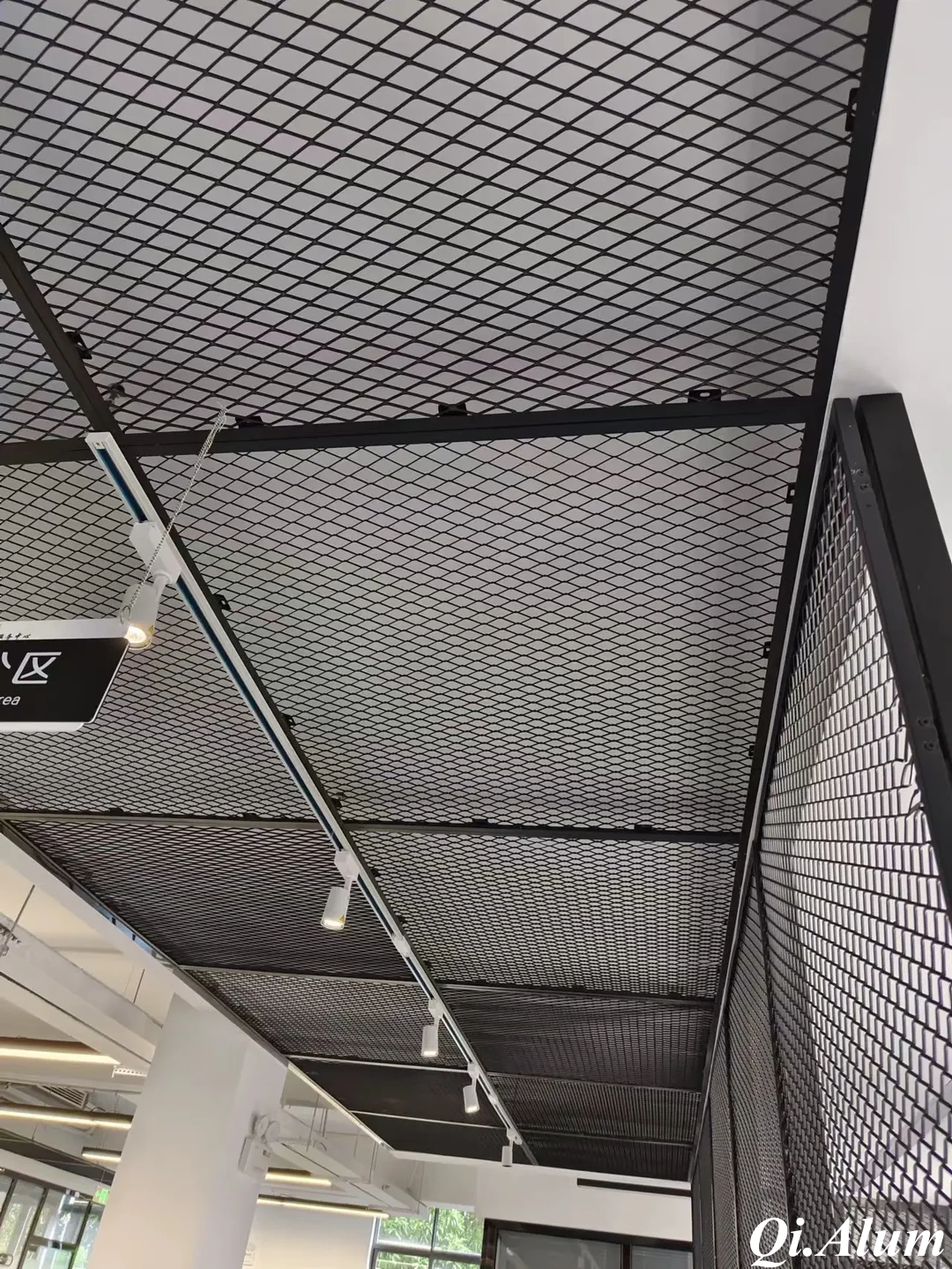
Ceiling Systems
Folded mesh panels can be used to form suspended ceiling components and decorative ceiling structures.
Special-Shaped Metal Structures
For projects involving irregular architectural geometry, folded mesh can be incorporated into specially fabricated aluminum assemblies.
Conclusion
Fabricating folded expanded aluminum mesh panels requires more than simply bending a flat metal sheet. Mesh orientation, strand dimensions, folding position, tooling, forming pressure, and edge reinforcement all influence the final result.
For standard designs, relatively straightforward folding methods may be sufficient. However, complex angles, large panel dimensions, and special architectural shapes may require customized tooling and prototype testing.
Foshan Qi Aluminum Decorative Materials Co., Ltd. specializes in architectural aluminum products, including expanded aluminum mesh, perforated aluminum panels, solid aluminum panels, and specially shaped aluminum components.
With CNC processing, aluminum fabrication, powder coating, and PVDF coating capabilities, we support architects, facade contractors, and international project buyers with manufacturing solutions based on technical drawings.
If your project requires folded expanded aluminum mesh panels, send us your drawings, mesh specifications, and required dimensions. Our team can review the fabrication requirements and provide a suitable production proposal.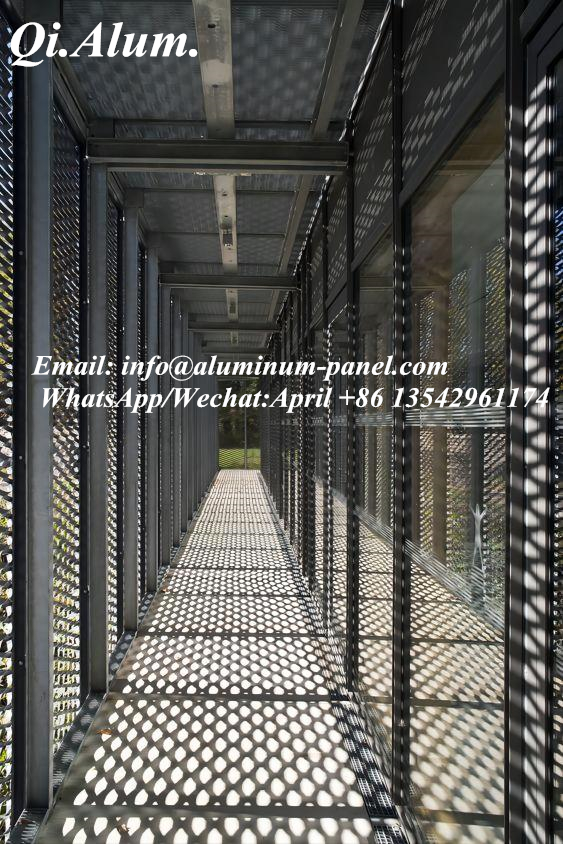
About us:
Foshan Qi Aluminum Decorative Materials Co.,Ltd, more than 12 years experience. We are manufacturer of fabricating aluminum perforated sheets, aluminum solid panels, aluminum screen,aluminum facade decorative sheets, aluminum expanded mesh, aluminum ceiling with good quality and fast delivery for more than 10 years to export countries. Our monthly supplying is about 80000 sqms for inside and outside market. Our projects covers five star hotel, high end villas, school, campus, metro station, airport, office building, shopping mall and some other goverment projects. We can provide design, fabrication and installation one stop service for your projects. High precision, quality guarantee, affordable price, globla delivery and considerate service is our basis. We accept OEM/ODM business. We are the experienced specialist on facade solution decoration!!!