Description
Does Expanded Aluminum Mesh Require Additional Edge Reinforcement?
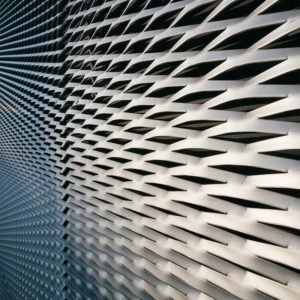
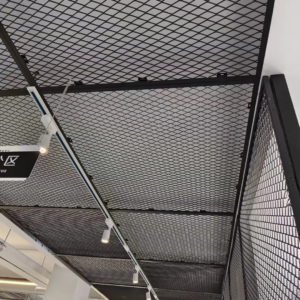
Expanded aluminum mesh is widely used in architectural facades, decorative screens, sunshade systems, ceilings, and other building applications. Its open metal structure provides an attractive combination of ventilation, visibility, and architectural texture.
However, when expanded aluminum mesh is fabricated into individual panels, one important question needs to be considered: does the panel require additional edge reinforcement?
The answer depends on several factors, including panel dimensions, aluminum thickness, mesh specifications, installation methods, and structural requirements. While some panels can be installed without additional reinforcement, larger panels or projects with demanding installation conditions may require reinforced edges or supporting frames.
This article explains when edge reinforcement is necessary, which reinforcement methods are commonly used, and what should be considered before manufacturing expanded aluminum mesh panels.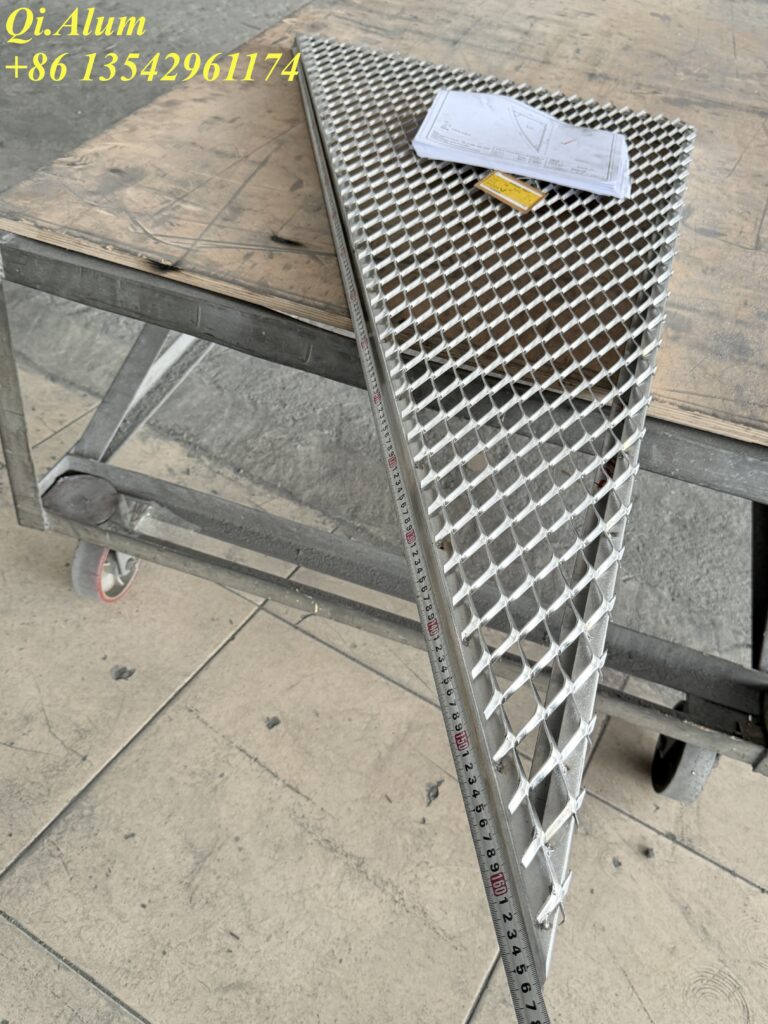
1. Why Is Edge Reinforcement Important for Expanded Aluminum Mesh?
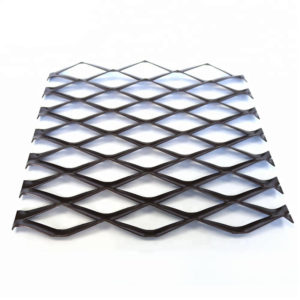
Expanded aluminum mesh is manufactured by cutting and stretching aluminum sheets to form interconnected openings. Unlike solid aluminum panels, its open structure contains metal strands and connecting joints that distribute loads differently.
During fabrication, transportation, handling, and installation, the panel edges may experience additional stress.
Without suitable edge treatment, some panels may experience:
- Edge deformation during handling or installation.
- Uneven panel alignment after fixing.
- Localized stress around fixing points.
- Reduced dimensional stability in large panels.
- Difficulty maintaining consistent gaps between adjacent panels.
Edge reinforcement helps improve the rigidity of the panel perimeter, provides more reliable fixing areas, and supports accurate installation.
However, reinforcement should be determined according to actual project conditions rather than applied to every panel automatically.
2. When Does Expanded Aluminum Mesh Need Additional Edge Reinforcement?
Not all expanded aluminum mesh panels require reinforced edges. The following situations deserve particular attention.
Large Panel Dimensions
Large-format panels are generally more difficult to handle and install than smaller panels.
As panel dimensions increase, the risk of bending, twisting, and edge deformation during transportation and installation may also increase.
For large facade panels, additional perimeter framing or reinforced fixing areas may help maintain panel geometry.
Thin Aluminum Material
Panels manufactured from thinner aluminum sheets may have less resistance to handling deformation, depending on the mesh configuration and overall dimensions.
If the design uses relatively thin material with large panel sizes, edge reinforcement should be evaluated during the engineering stage.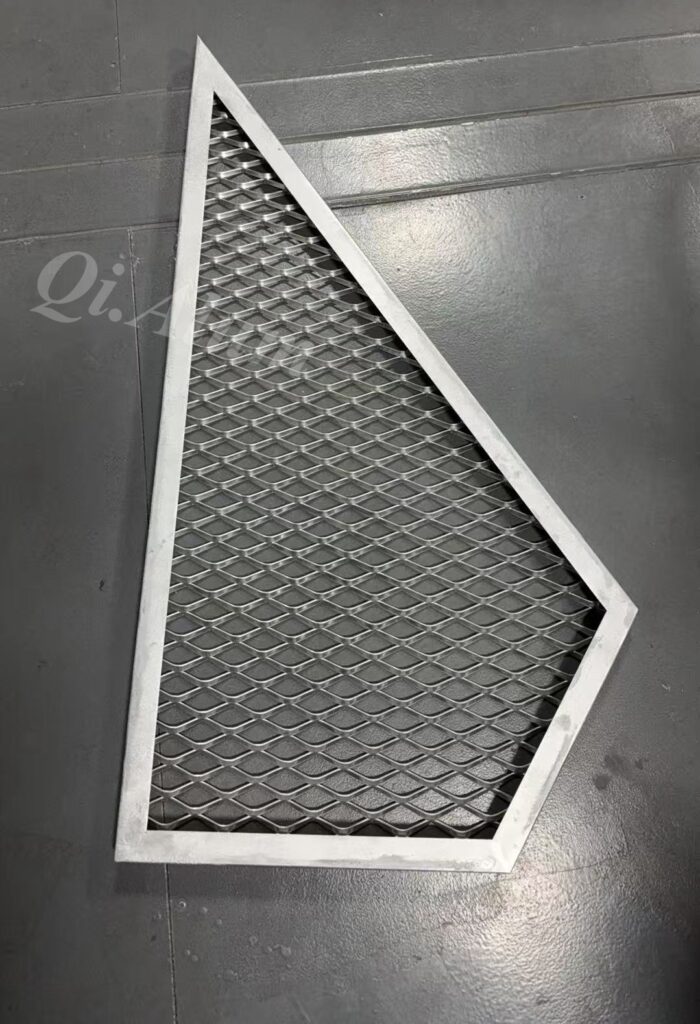
Heavy Wind Loads
Exterior expanded aluminum mesh screens and facade systems are exposed to wind pressure and suction.
Although wind loads act across the entire panel, the fixing points and supporting edges transfer these forces to the subframe.
For projects in coastal areas, high-rise buildings, or locations with demanding wind conditions, the complete panel and supporting system should be checked by qualified facade engineers.
Complex Panel Shapes
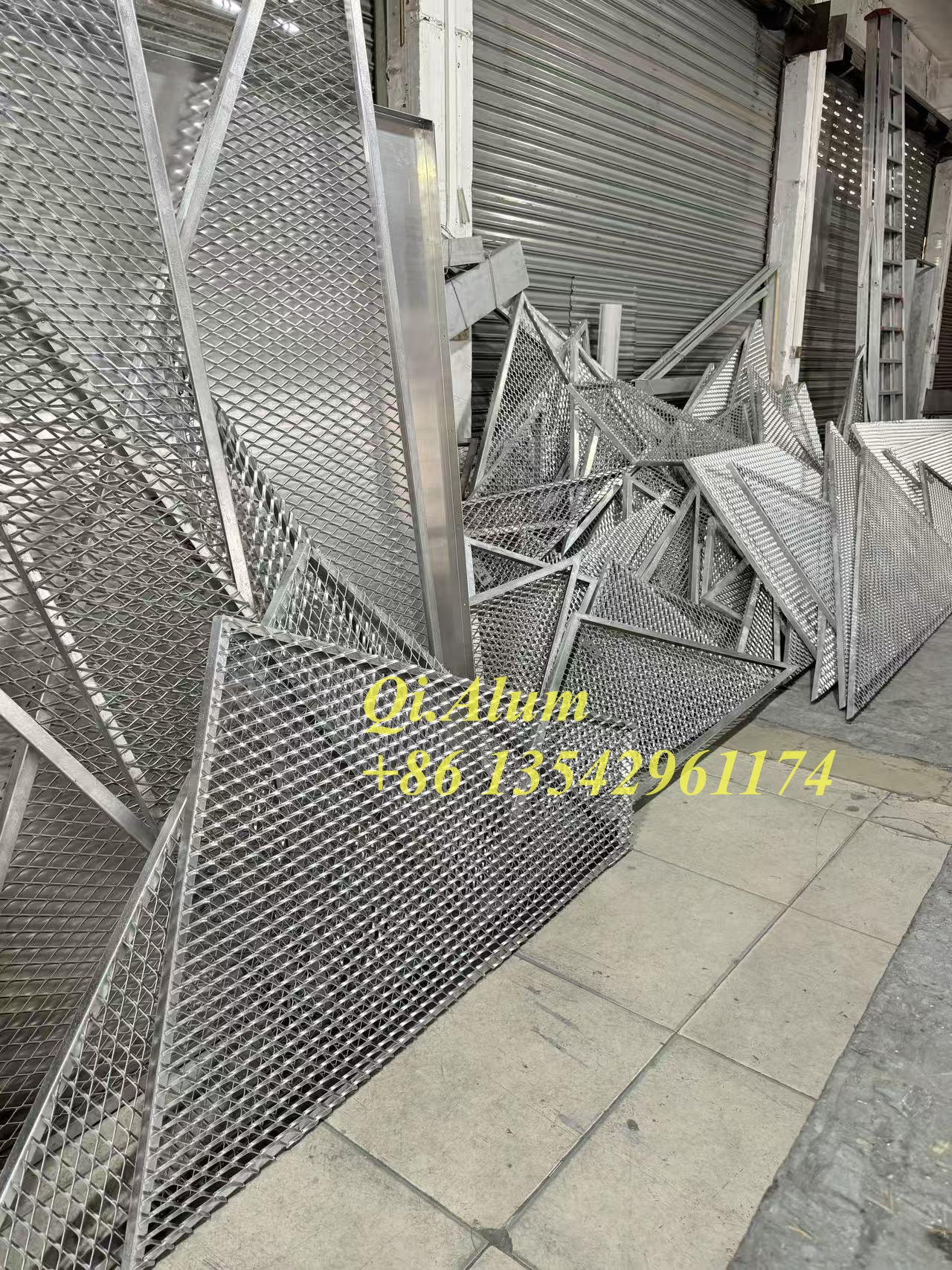
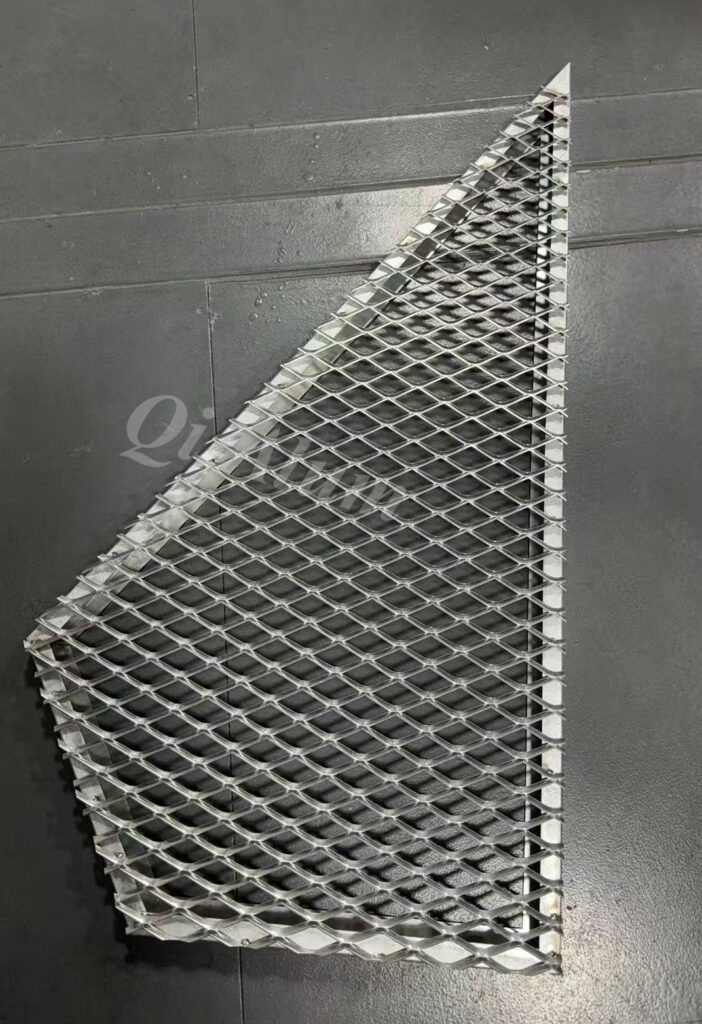
Rectangular panels usually have more straightforward edge configurations. However, triangular, trapezoidal, curved-edge, and irregular panels may require additional attention.
Their geometry can create uneven stress distribution and more complicated fixing arrangements.
Reinforced borders or specially designed supporting frames may help maintain the intended shape.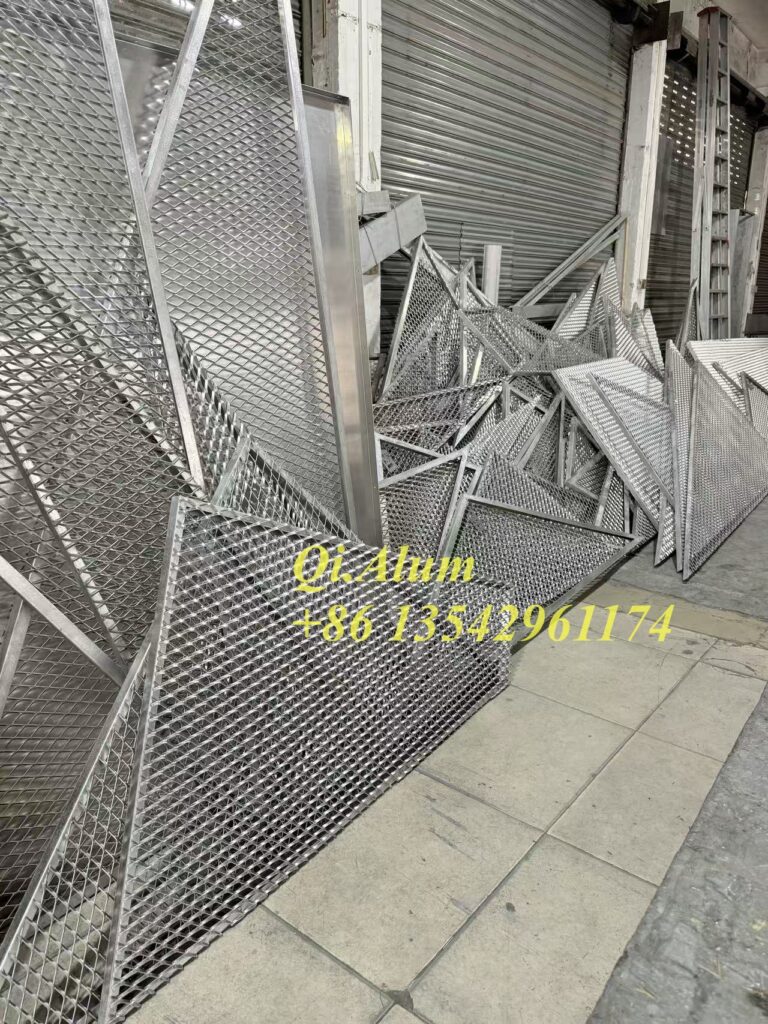
Frequent Handling and Installation
Panels that require long-distance transportation, repeated handling, or installation at elevated positions may benefit from stronger perimeter protection and more rigid fixing details.
The final reinforcement method should also allow safe handling without damaging the expanded mesh strands.
3. Common Edge Reinforcement Methods
Several reinforcement methods can be used depending on the panel design and project requirements.
Aluminum Edge Framing
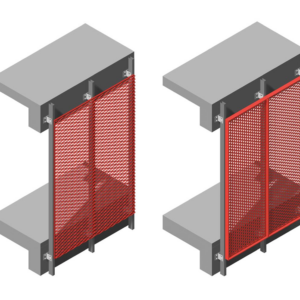
An aluminum frame can be attached around the perimeter of an expanded aluminum mesh panel.
This is a common approach for large facade panels and decorative screening systems.
The frame provides a more defined panel boundary, improves handling stability, and creates convenient connection points for installation.
The frame profile, thickness, and connection details should be selected according to the panel dimensions and structural design.
Aluminum Flat Bar Reinforcement
Aluminum flat bars can be installed along selected panel edges to provide additional rigidity.
This approach may be suitable when the project requires reinforcement without a large perimeter frame.
Flat bars can also help create consistent fixing zones and improve the appearance of panel boundaries.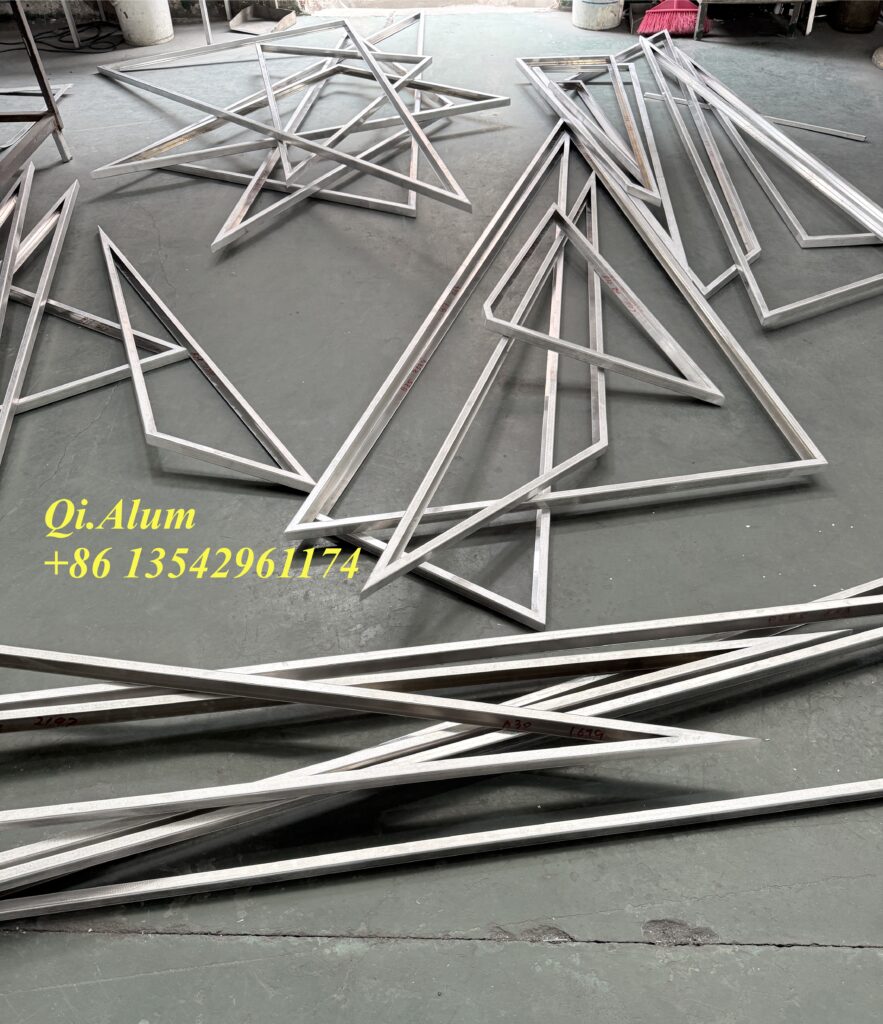
Folded Edge Design
Where the material configuration and fabrication process allow, the perimeter of an expanded aluminum mesh panel can be designed with folded or formed edge details.
This can improve edge rigidity and create a cleaner finished appearance.
However, expanded mesh is an open structure, so folding is not suitable for every mesh specification. The feasibility must be confirmed before production.
Additional Supporting Brackets
For certain installations, additional brackets or fixing components can be used to improve support around the panel perimeter.
Their positions should be coordinated with the mesh pattern to avoid damaging the strands or creating unnecessary stress concentrations.
4. Edge Reinforcement vs. Standard Expanded Mesh Panels
The choice between standard edge treatment and additional reinforcement depends on the intended application.
| Consideration | Standard Edge Treatment | Additional Reinforcement |
|---|---|---|
| Panel dimensions | Often suitable for smaller panels | Often considered for larger panels |
| Panel rigidity | Depends on mesh and material | Can improve perimeter rigidity |
| Installation | Requires suitable fixing details | Can provide defined fixing zones |
| Panel weight | Generally lower | Increases depending on frame design |
| Fabrication cost | Usually lower | Higher due to additional materials and processing |
| Appearance | More visible open mesh edges | Can create a framed panel appearance |
It is important to note that edge reinforcement does not automatically make a panel structurally adequate. Material thickness, mesh geometry, support spacing, connection design, and wind loads must all be considered together.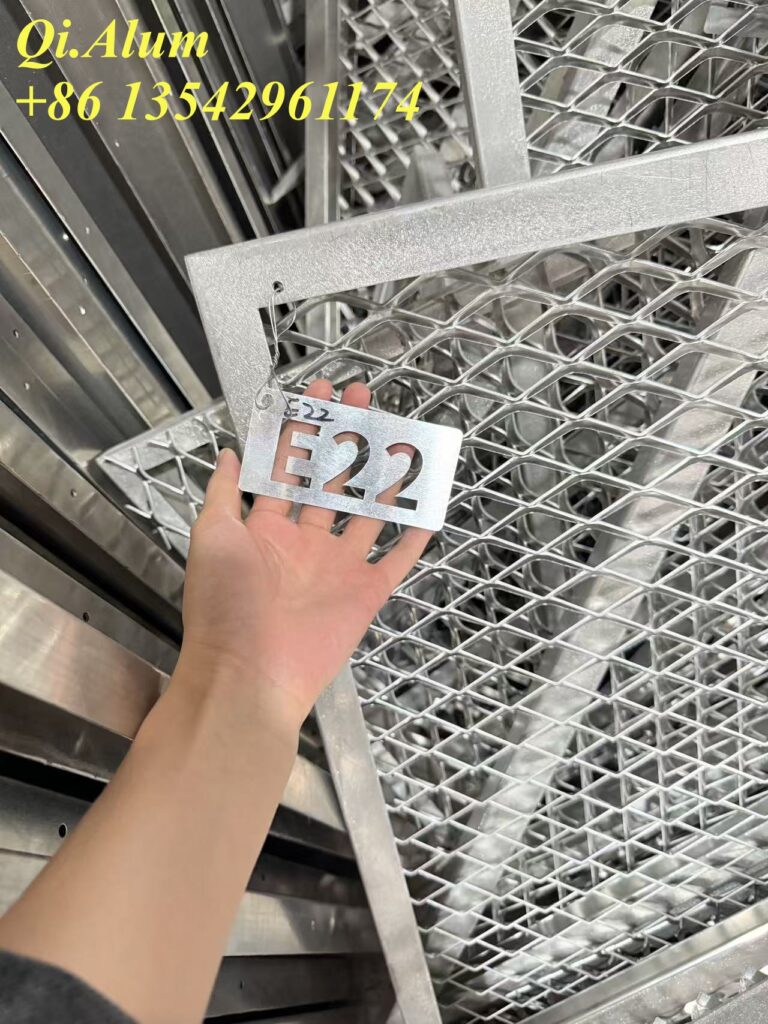
5. How to Choose the Right Reinforcement Structure
Before selecting an edge reinforcement method, manufacturers and project designers should review several technical factors.
Panel Size
Confirm the overall width and height of each panel. Larger dimensions may require additional framing or intermediate support.
Aluminum Thickness and Alloy
Different aluminum alloys and thicknesses have different mechanical properties. The material should be selected according to fabrication requirements and project loads.
Mesh Specifications
Opening dimensions, strand width, strand thickness, and mesh orientation all influence panel behavior.
Fixing Method
Determine whether the panels will be fixed with bolts, brackets, clips, or a supporting frame. The fixing details should be compatible with the reinforced edge.
Environmental Conditions
Exterior panels must be designed for the expected wind pressure, temperature variation, corrosion exposure, and maintenance requirements.
Architectural Appearance
Some projects prefer exposed mesh edges, while others require a concealed frame or a more solid perimeter. Reinforcement details should be coordinated with the architectural design.
6. Can Edge Reinforcement Affect the Appearance of Expanded Aluminum Mesh?
Yes. Additional edge reinforcement can change the visual appearance of an expanded aluminum mesh panel.
A visible aluminum frame creates a clear border around the mesh, which may suit architectural facade systems with defined panel divisions.
A concealed or minimal reinforcement design can preserve a more continuous mesh appearance.
For decorative screens, designers may also select different frame colors to create contrast between the mesh surface and the perimeter.
Before mass production, it is advisable to review fabrication drawings and physical samples to confirm that the reinforced edges match the intended architectural appearance.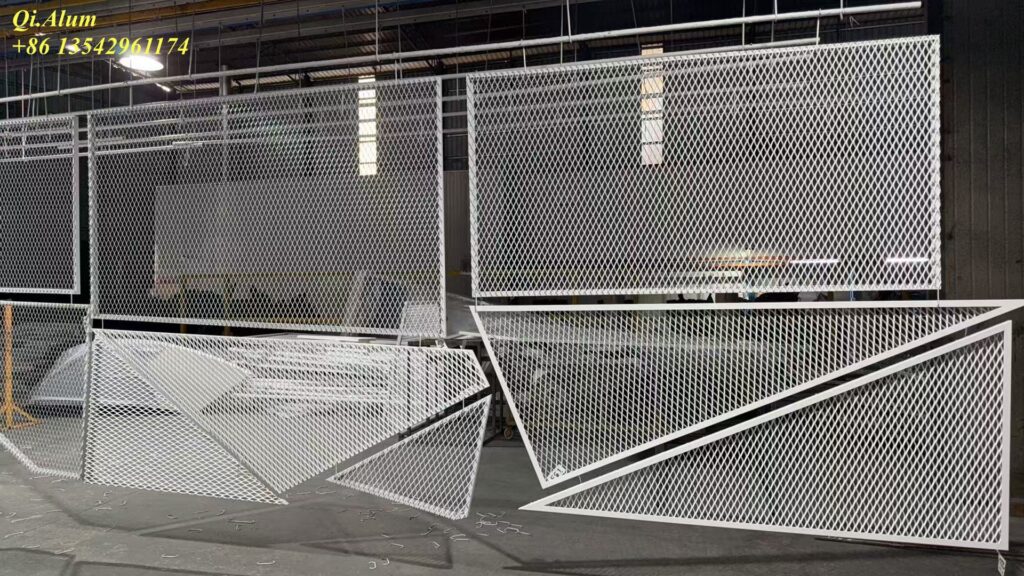
7. What Information Should Be Provided Before Manufacturing?
To determine whether additional edge reinforcement is required, the manufacturer needs sufficient project information.
The following details are helpful when requesting a quotation:
- Overall panel width and height.
- Aluminum alloy and material thickness.
- Mesh opening dimensions and strand specifications.
- Required panel quantities.
- Installation location and application.
- Fixing method and supporting structure details.
- Surface finish and color requirements.
- Architectural drawings or panel fabrication drawings.
For large facade projects, providing elevation drawings and fixing details is especially important.
A manufacturer can then review the fabrication requirements and recommend suitable edge treatment options for further engineering verification.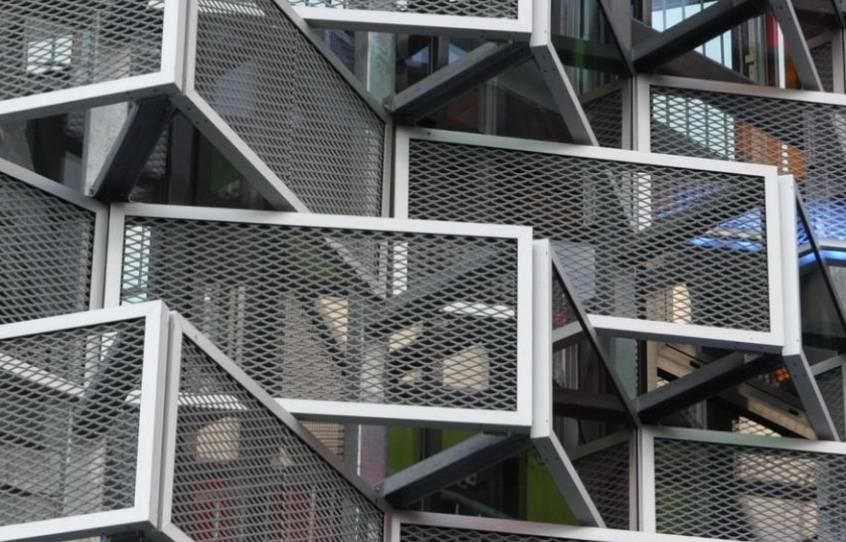
Conclusion
Does expanded aluminum mesh require additional edge reinforcement? Not always. Smaller panels with suitable material specifications and appropriate fixing details may not need additional reinforcement. However, large-format panels, thin-gauge materials, irregular shapes, and exterior facade applications may require reinforced edges or supporting frames.
Choosing the right solution involves balancing panel rigidity, installation requirements, fabrication cost, and architectural appearance.
Foshan Qi Aluminum Decorative Materials Co., Ltd. manufactures expanded aluminum mesh, perforated aluminum panels, solid aluminum panels, and specially shaped architectural aluminum products.
With CNC fabrication, aluminum processing, powder coating, and PVDF coating capabilities, we support project-based manufacturing according to customer drawings and technical requirements.
If you are planning an expanded aluminum mesh facade or decorative screen project, send us your panel dimensions and drawings. Our team can help review the fabrication details and discuss suitable edge reinforcement options for your project.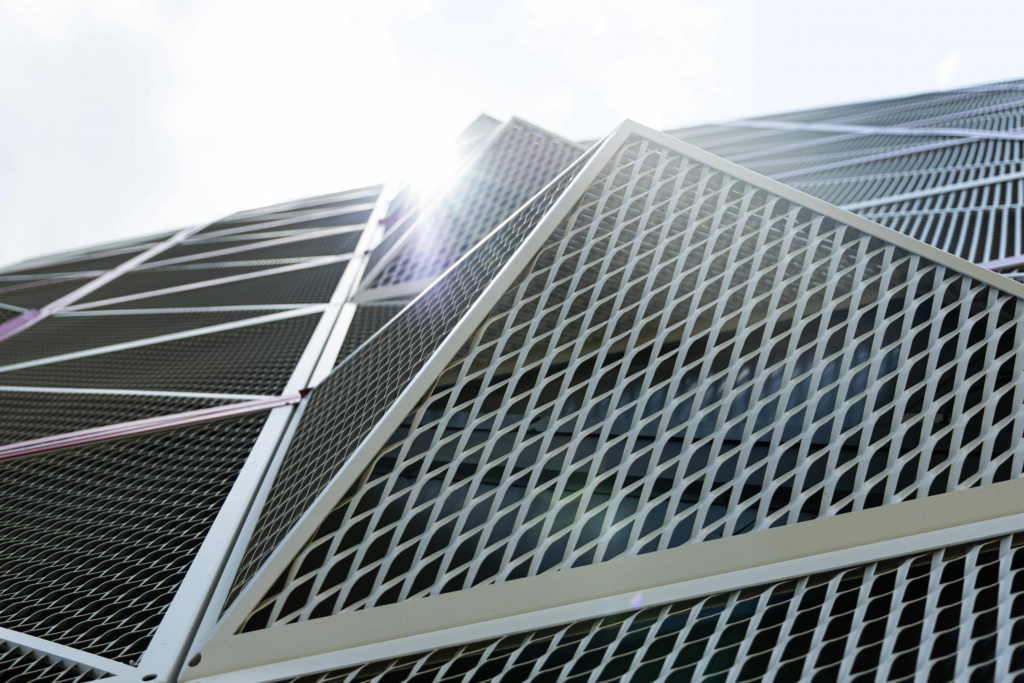
About us:
Foshan Qi Aluminum Decorative Materials Co.,Ltd, more than 12 years experience. We are manufacturer of fabricating aluminum perforated sheets, aluminum solid panels, aluminum screen,aluminum facade decorative sheets, aluminum expanded mesh, aluminum ceiling with good quality and fast delivery for more than 10 years to export countries. Our monthly supplying is about 80000 sqms for inside and outside market. Our projects covers five star hotel, high end villas, school, campus, metro station, airport, office building, shopping mall and some other goverment projects. We can provide design, fabrication and installation one stop service for your projects. High precision, quality guarantee, affordable price, globla delivery and considerate service is our basis. We accept OEM/ODM business. We are the experienced specialist on facade solution decoration!!!