Description
Why Do Some Expanded Aluminum Mesh Facades Look More Transparent Than Others?
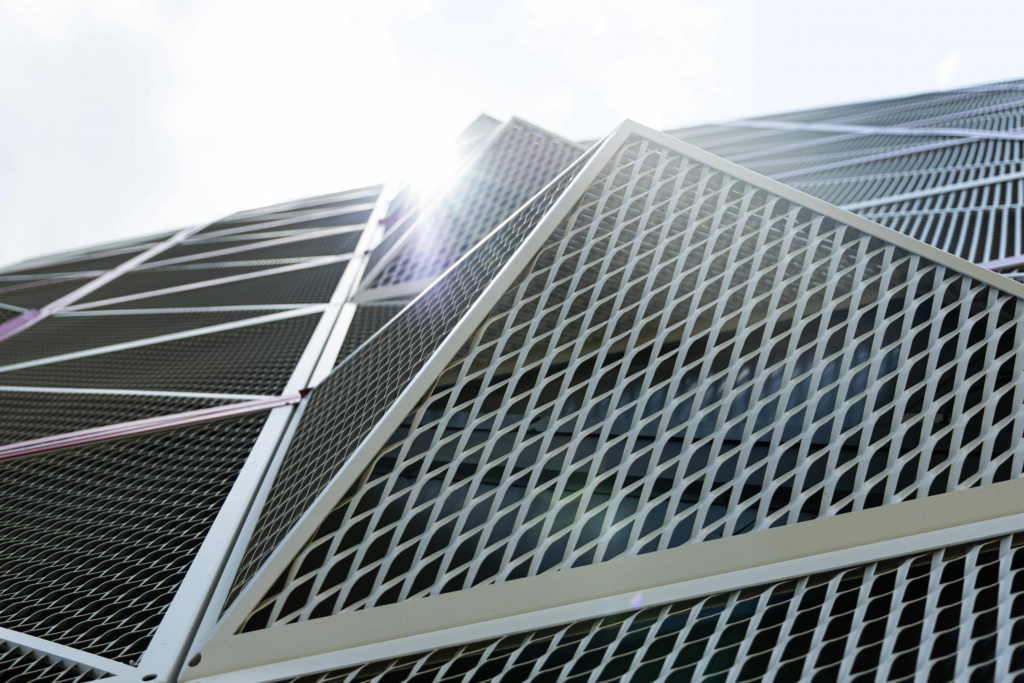
Expanded aluminum mesh is widely used in modern building facades because it combines a distinctive metallic appearance with ventilation, daylight access, and partial visibility through the screen. Yet, when comparing two buildings clad with expanded metal mesh, one facade may look almost transparent while another appears dense and nearly solid.
Why does this happen, even when both facades use aluminum mesh?
The answer is not simply the size of the openings. The transparency of an expanded aluminum mesh facade depends on the relationship between mesh geometry, strand dimensions, viewing angle, lighting conditions, surface finish, and the background behind the panels.
Understanding these factors helps architects, facade contractors, and building owners choose the right expanded aluminum mesh for their projects. It also helps manufacturers produce panels that deliver the intended appearance after installation, rather than just matching a product photograph.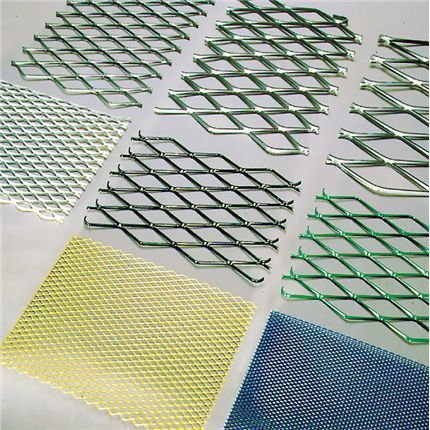
1. Open Area Ratio: The First Factor to Check
Open area ratio is one of the most useful indicators when comparing expanded aluminum mesh products.
It describes the percentage of the mesh surface occupied by openings rather than solid aluminum strands. A higher open area generally allows more light and visibility through the screen, while a lower open area usually creates a denser appearance.
However, nominal open area does not tell the entire story.
Consider two expanded aluminum mesh panels with similar overall dimensions. One has relatively large diamond-shaped openings and narrow strands. The other has smaller openings and wider strands. Even if their material thicknesses are similar, the first panel will often appear more transparent.
The difference becomes especially noticeable when viewing a building from a distance.
A mesh with larger openings may allow pedestrians to see windows, balconies, or interior spaces behind the facade. A denser pattern may instead read as a continuous decorative surface.
When comparing specifications, examine:
- Diamond opening length and width.
- Strand width.
- Material thickness.
- Overall open area ratio.
- Raised or flattened mesh construction.
Practical tip: Do not select expanded aluminum mesh by opening size alone. Compare the opening dimensions and strand width together, then review a sample under realistic viewing conditions.
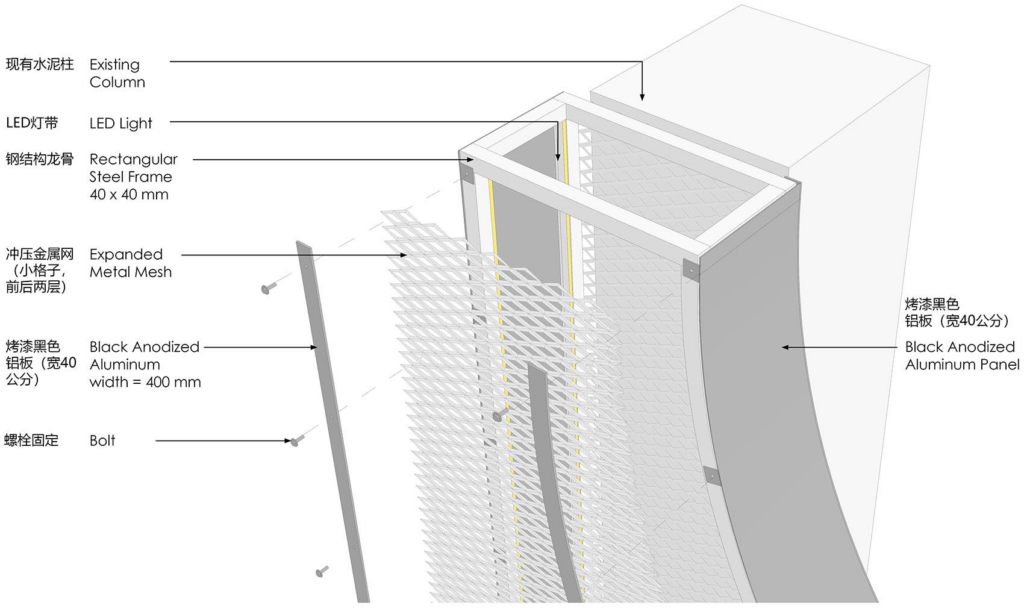
2. Diamond Shape and Mesh Orientation Can Change the Visual Effect
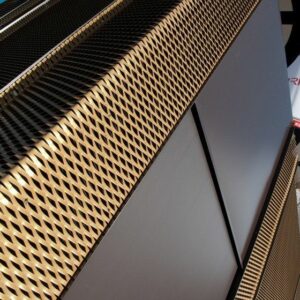
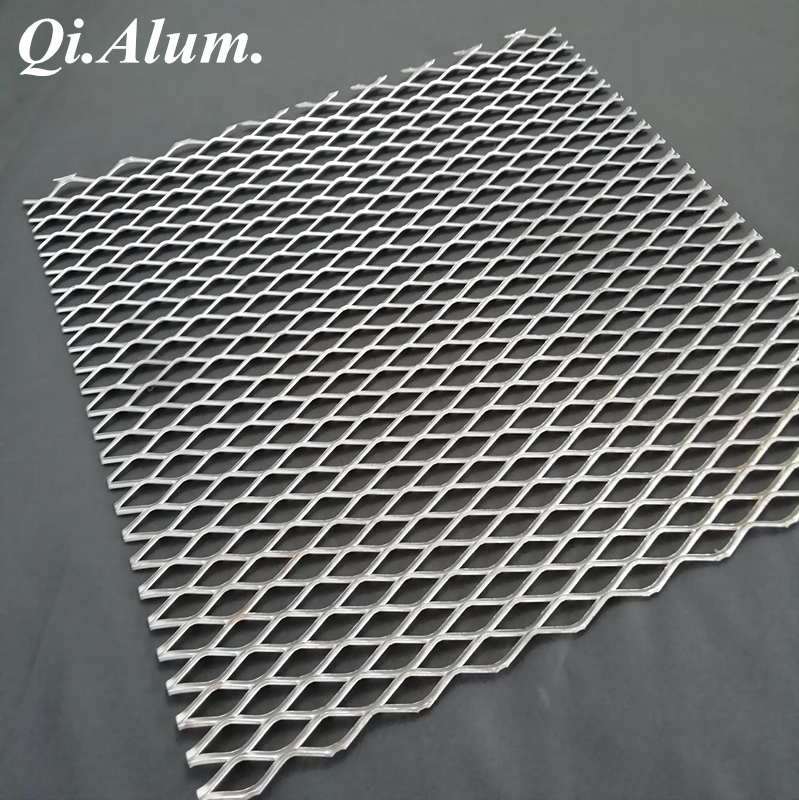
Expanded aluminum mesh is produced by cutting and stretching a metal sheet, creating interconnected strands and diamond-shaped openings.
Unlike a simple square perforation pattern, the geometry of expanded metal is directional. The long way of the diamond (LWD), short way of the diamond (SWD), and strand inclination all influence how the openings appear from different positions.
For example, a vertically oriented diamond pattern may create a different visual impression from a horizontally oriented pattern, even when the nominal opening dimensions remain unchanged.
The orientation of raised strands also affects how light passes through the panel. Depending on the viewing angle, some strands may partially obstruct the background, making the mesh look denser than expected.
This becomes important when installing large numbers of panels across a building elevation.
If panels are rotated inconsistently, the facade may develop alternating light and dark areas. The result can look less uniform and, in some cases, less transparent.
Before fabrication, architectural drawings should clearly identify:
- LWD and SWD directions.
- The intended installed orientation.
- The visible face of the mesh, where relevant.
- Panel numbering and layout.
- Any requirements for consistent pattern alignment.
For projects with demanding visual requirements, an installed mock-up is more reliable than judging orientation from a small sample held in the hand.
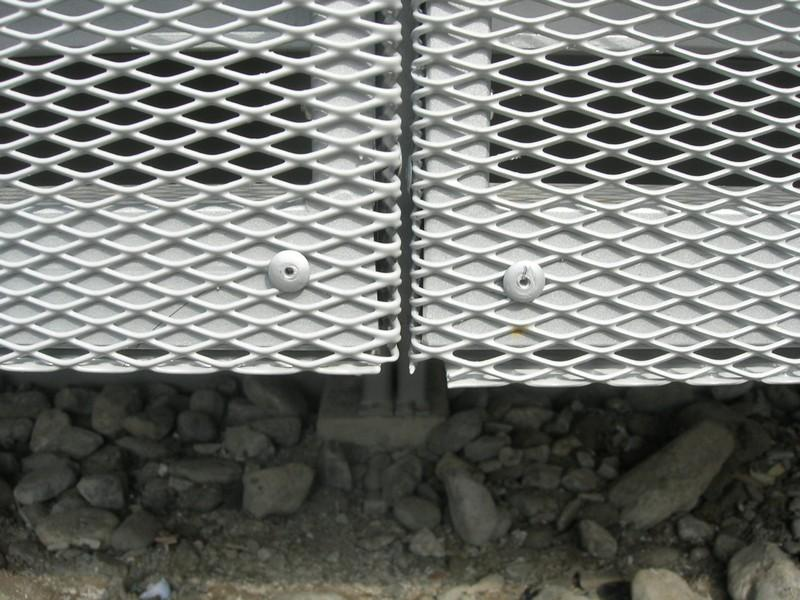
3. Strand Width and Thickness: Small Changes, Visible Differences
When customers compare expanded aluminum mesh, they often focus on material thickness because it is easy to specify and measure.
However, thickness alone does not determine transparency.
Strand width is equally important because it affects how much of the background is visually blocked by the metal.
A panel with wider strands may create a heavier, more solid appearance. Narrower strands can make the pattern look lighter and more open, provided that the complete geometry and structural requirements are suitable.
Thickness also affects the three-dimensional appearance of raised mesh. Depending on the manufacturing process and strand geometry, thicker or more pronounced strands may create stronger highlights and shadows.
For architectural facade applications, the goal is to balance appearance with performance.
Very open mesh may be visually attractive but could be unsuitable for certain screening, safety, or structural requirements. Conversely, a dense mesh may provide stronger visual screening than the project actually needs.
The best specification considers opening dimensions, strand width, material thickness, panel size, and the required structural performance together.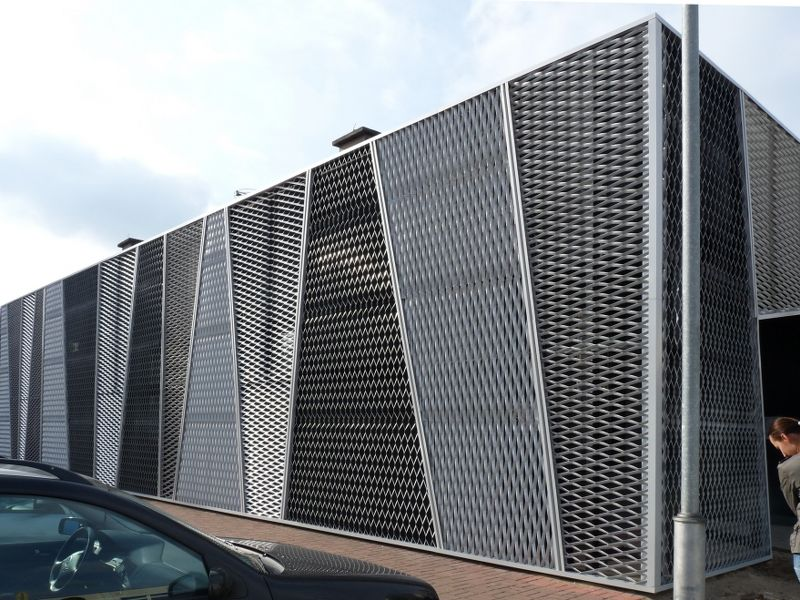
4. Why the Background Behind the Mesh Matters So Much
One of the easiest ways to misunderstand expanded aluminum mesh transparency is to evaluate the material without considering what sits behind it.
The same mesh can look completely different when installed in front of a dark cavity, a white concrete wall, or a glass curtain wall.
Dark background
A dark background often makes the openings less visually distinct from the surrounding shadowed areas. Depending on the mesh finish and lighting, this can create a more continuous, screen-like appearance.
Light-colored wall
A white or light-colored background may be clearly visible through the diamond openings, making the pattern easier to distinguish.
However, strong contrast between the strands and the background can also make the mesh pattern appear more visually prominent.
Glass curtain wall
Glass introduces another layer of complexity. Reflections, interior lighting, blinds, and curtain wall mullions can all affect how much of the building behind the mesh is visible.
In some situations, reflections make the facade appear more opaque. At other times, clear glazing allows the viewer to see deep into the building.
This is why a product sample photographed against a plain background may not accurately represent its appearance on a real building.
For the most reliable result, evaluate the mesh against a background similar to the actual project facade.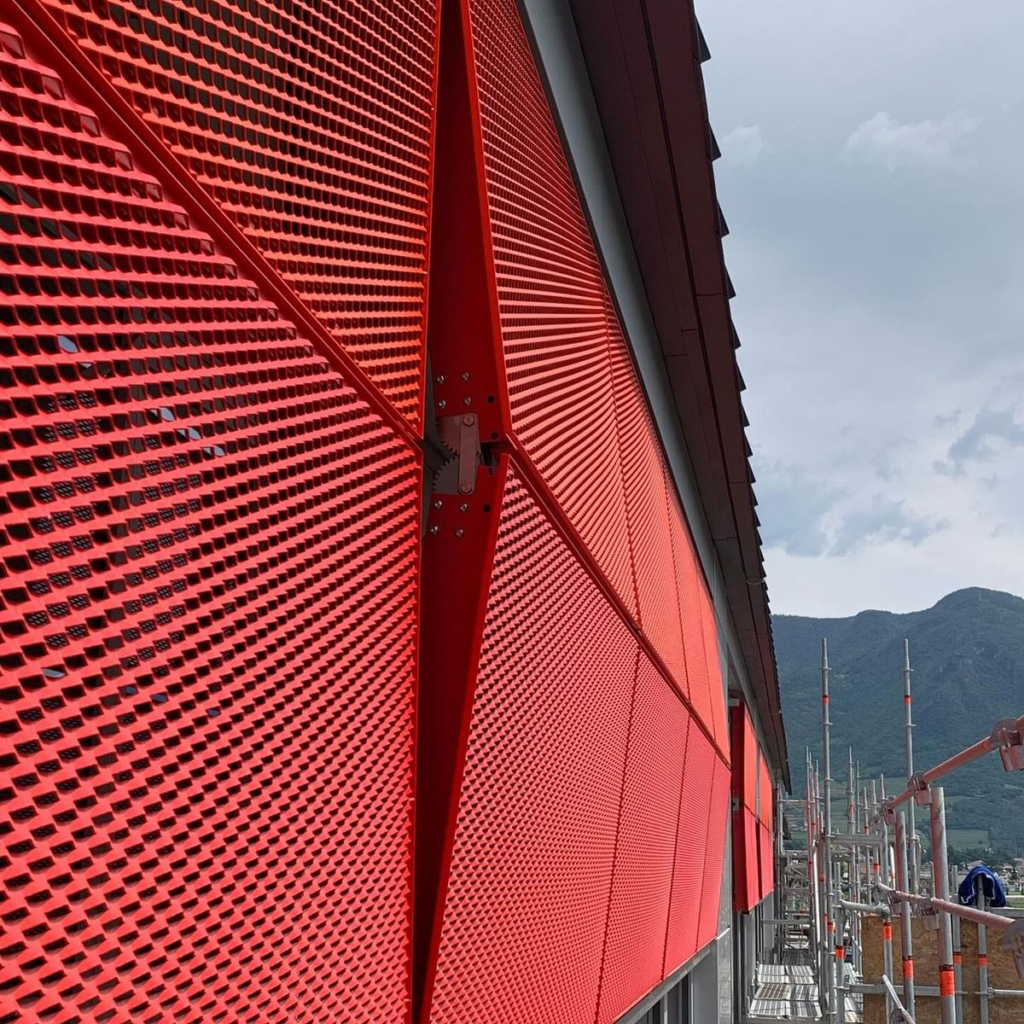
5. Viewing Distance and Angle Affect Perceived Transparency
Transparency is not always a fixed visual property. It changes with the observer’s position.
Stand directly in front of an expanded aluminum mesh panel and the openings may appear relatively clear. Move to one side, and the raised strands may overlap the line of sight, making the same panel look denser.
Distance also changes perception.
At close range, individual diamond openings and strand details are easy to distinguish. From across the street, the mesh may merge into a continuous metallic surface.
This is particularly relevant for shopping centers, office buildings, parking structures, and other large architectural projects.
The design should therefore be evaluated from several important viewing positions:
- Close range, for visitors walking beside the building.
- Street level, for pedestrians and passing vehicles.
- Across the street, for the overall facade appearance.
- Oblique angles, especially near building corners.
- Interior viewpoints, when the mesh is installed in front of glazing.
For large facades, designers should not rely exclusively on close-up product images. Three-dimensional renderings and full-scale mock-ups can help reveal how the mesh will actually look at different distances.
6. Raised Expanded Metal vs. Flattened Expanded Metal
The manufacturing process also affects the appearance of expanded aluminum mesh.
Raised expanded metal retains a three-dimensional strand profile after cutting and stretching. Flattened expanded metal undergoes an additional flattening process, producing a flatter surface.
These two products can look noticeably different even when their nominal diamond opening dimensions are similar.
Raised expanded aluminum mesh has a more pronounced texture. Its angled strands can create directional highlights and shadows, and its apparent transparency may change noticeably with the viewing angle.
Flattened expanded aluminum mesh generally presents a flatter surface and a different light-interaction pattern. Depending on its geometry and finish, it may provide a more uniform visual appearance from certain viewing positions.
Neither type is automatically more transparent in every situation. The result depends on the actual opening dimensions, strand geometry, and installation conditions.
When selecting mesh for a facade, ask the manufacturer whether the quoted specifications refer to raised or flattened mesh. Comparing these products solely by nominal opening size can lead to misleading conclusions.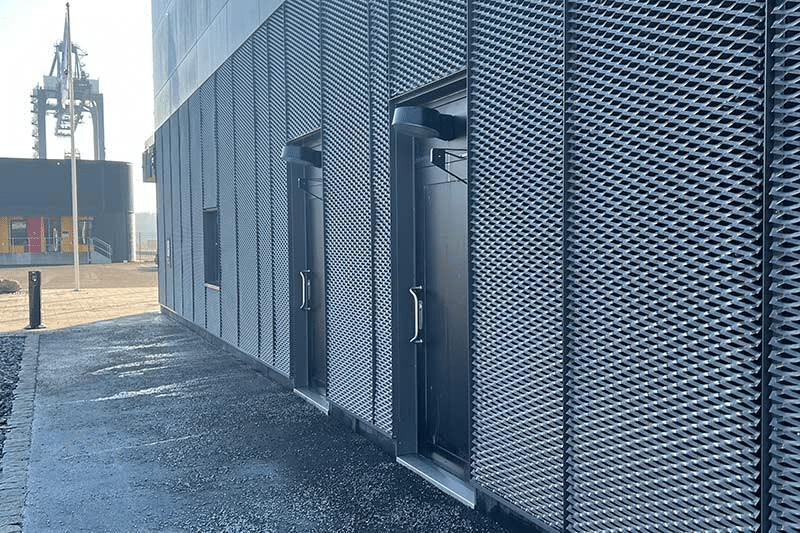
7. Surface Finish and Color Influence the Perception of Openness
The surface finish of expanded aluminum mesh affects how the metal interacts with daylight.
A matte powder-coated finish generally produces a different visual effect from a glossy or metallic finish. Glossy surfaces may create stronger highlights under direct sunlight, while matte finishes tend to produce more diffuse reflections.
Color also matters.
Dark finishes may visually merge with shadowed cavities, while light finishes can make the metal strands stand out more clearly against darker backgrounds. Metallic finishes may change in appearance as the sun moves across the facade.
These effects influence perceived transparency, although they do not necessarily change the mesh’s physical open area.
For architectural projects, it is useful to assess the proposed color and finish alongside the actual mesh pattern.
A good sample review should include:
- The selected mesh specification.
- The intended coating and color.
- A representative background.
- Natural daylight and, where relevant, artificial lighting.
- Several viewing angles.
This approach helps avoid choosing a finish that looks attractive on a small sample but behaves differently across a large building elevation.
8. How Sunlight Changes the Transparency of an Expanded Aluminum Mesh Facade
A facade that looks open in the morning may appear much denser in the afternoon.
This can happen because sunlight changes the contrast between the aluminum strands and the openings. Direct sunlight may produce bright highlights on the metal, while the cavity behind the mesh remains relatively dark.
Under other conditions, the background may be brightly illuminated, making the openings more noticeable.
The direction of sunlight also affects the shadows cast by raised strands and supporting frames.
For buildings with different facade orientations, these effects may vary throughout the day and across seasons.
If daylight transmission is important, designers should consider the building’s orientation, surrounding obstructions, mesh geometry, and intended interior use.
For projects where precise daylight or solar-control performance is required, visual inspection alone is not enough. Appropriate daylight analysis, solar studies, or physical testing may be necessary.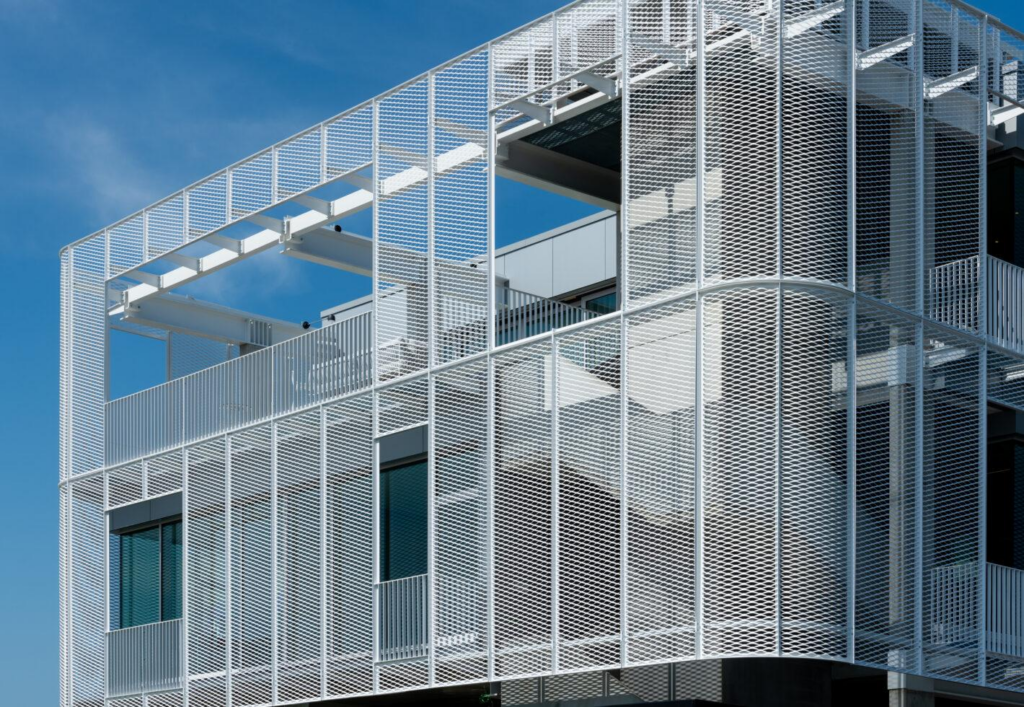
9. How to Choose the Right Expanded Aluminum Mesh for Your Project
The right mesh specification depends on what the facade needs to achieve.
A shopping center may prioritize a distinctive exterior appearance, while a parking structure may require a balance of visibility, ventilation, and screening. An office building with a glass curtain wall may place greater emphasis on daylight, glare control, and the appearance of the interior through the screen.
Before confirming an order, consider the following checklist.
For a more open appearance:
- Compare products with higher open area ratios.
- Review strand width and diamond dimensions together.
- Evaluate the installed mesh orientation.
- Consider the color and reflectivity of the background.
- Inspect the facade from realistic viewing distances.
For a more screened appearance:
- Evaluate denser mesh patterns.
- Consider how the mesh finish contrasts with the background.
- Check visibility from oblique viewing angles.
- Review the relationship between the mesh and the supporting structure.
For either application:
- Confirm the required panel dimensions and fabrication tolerances.
- Verify wind resistance and attachment requirements.
- Check corrosion protection and finish suitability.
- Approve a representative sample or mock-up before mass production.
Remember that a more transparent mesh is not automatically a better choice. The best product is the one that meets the project’s visual, functional, and engineering requirements.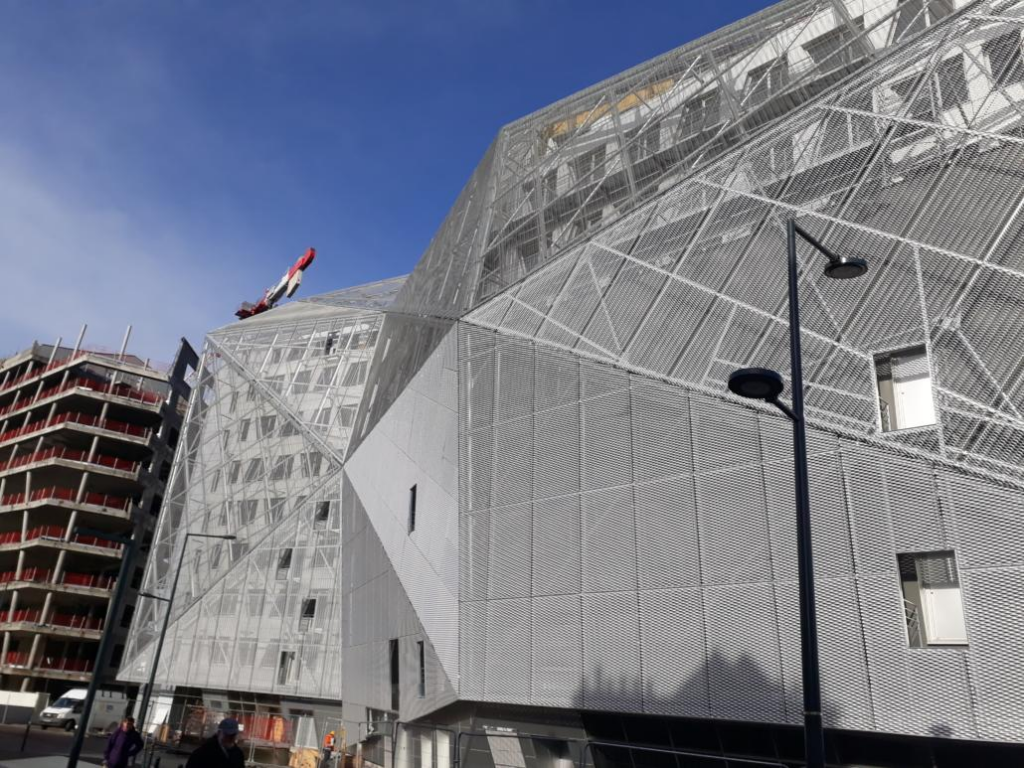
10. Custom Expanded Aluminum Mesh for Architectural Facades
At Foshan Qi Aluminum Decorative Materials Co., Ltd., we manufacture expanded aluminum mesh and architectural aluminum products for building facade and decorative applications.
We understand that the final appearance of an expanded metal facade depends on more than the nominal mesh opening. Strand dimensions, panel orientation, surface finish, and the relationship between the mesh and the building envelope all contribute to the finished result.
Depending on project requirements, we can discuss:
- Customized expanded aluminum mesh patterns.
- Opening dimensions and strand specifications.
- Raised and flattened mesh options.
- Panel sizing and edge fabrication.
- Powder-coated and PVDF-coated finishes.
- Fabrication drawings and material samples.
- Export packaging for international projects.
If you are selecting expanded aluminum mesh for a commercial building, office facade, parking structure, or architectural screening system, providing the elevation drawings and intended visual effect can help us discuss suitable product specifications.
Final structural design, attachment details, and compliance with applicable building regulations should be verified by the responsible project professionals.
Looking for expanded aluminum mesh for your next facade project?
Contact Foshan Qi Aluminum to discuss your required opening size, strand dimensions, finish, and panel layout.
Visit our website: https://aluminum-panel.com/
Frequently Asked Questions
Does a higher open area ratio always mean a more transparent facade?
Not necessarily. A higher open area generally allows more light and visibility through the mesh, but perceived transparency also depends on strand geometry, viewing angle, surface finish, background contrast, and lighting conditions.
Which expanded aluminum mesh is best for glass curtain walls?
The appropriate mesh depends on the desired visibility, shading performance, facade orientation, and architectural design. The mesh should be evaluated against the actual glazing and supporting structure rather than selected by opening size alone.
Can expanded aluminum mesh provide privacy while allowing ventilation?
Yes. Expanded aluminum mesh can provide partial visual screening while allowing air to pass through its openings. The level of privacy and ventilation depends on the mesh geometry, open area, viewing angle, and surrounding conditions.
Is raised expanded metal more transparent than flattened expanded metal?
Not universally. Raised and flattened mesh have different surface geometries and light-interaction characteristics. Their relative transparency depends on the complete specification and installation conditions.
Should I request a sample before ordering expanded aluminum mesh?
Yes, especially for large facade projects. A representative sample allows you to assess opening dimensions, strand width, finish, color, and visual transparency before confirming the full order. For critical projects, a larger installed mock-up is even more useful.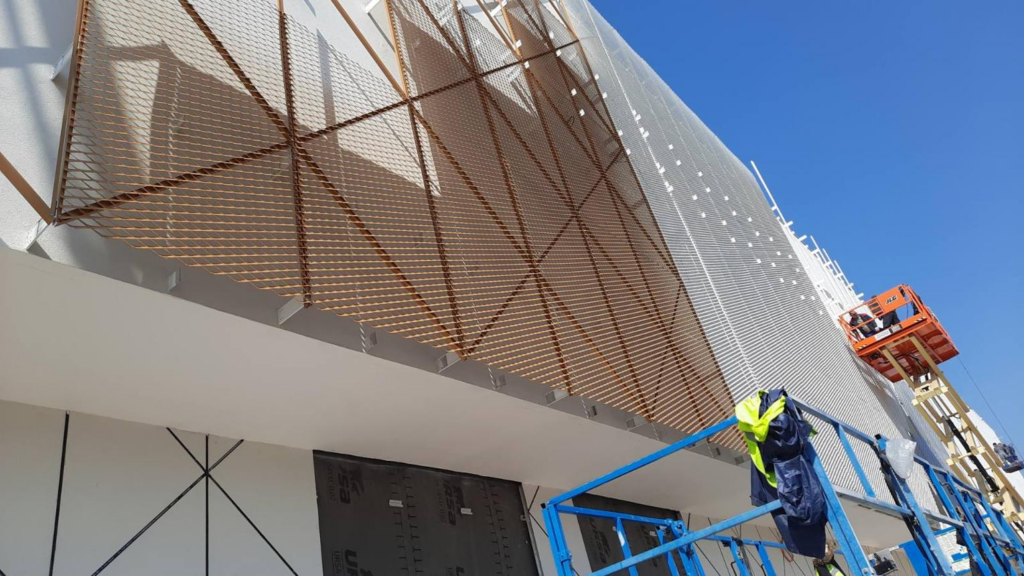
About us:
Foshan Qi Aluminum Decorative Materials Co.,Ltd, more than 12 years experience. We are manufacturer of fabricating aluminum perforated sheets, aluminum solid panels, aluminum screen,aluminum facade decorative sheets, aluminum expanded mesh, aluminum ceiling with good quality and fast delivery for more than 10 years to export countries. Our monthly supplying is about 80000 sqms for inside and outside market. Our projects covers five star hotel, high end villas, school, campus, metro station, airport, office building, shopping mall and some other goverment projects. We can provide design, fabrication and installation one stop service for your projects. High precision, quality guarantee, affordable price, globla delivery and considerate service is our basis. We accept OEM/ODM business. We are the experienced specialist on facade solution decoration!!!