Description
How Does Expanded Aluminum Mesh Ceiling Affect Light Transmission and Sound Absorption?
An expanded aluminum mesh ceiling can completely change how a commercial interior looks and sounds. Instead of creating a solid barrier overhead, it allows light, air, and sound to pass through its openings while maintaining a distinctive architectural appearance.
But two questions often come up during ceiling design:
How much light can pass through expanded aluminum mesh, and can it actually reduce noise?
The answer depends on more than the mesh opening size. Open area percentage, strand width, mesh orientation, lighting position, acoustic backing, and ceiling cavity depth all influence the final result.
Understanding these factors helps architects and contractors select the right aluminum expanded metal ceiling for offices, airports, shopping malls, restaurants, and other commercial spaces.
1. How Much Light Can Pass Through an Expanded Aluminum Mesh Ceiling?
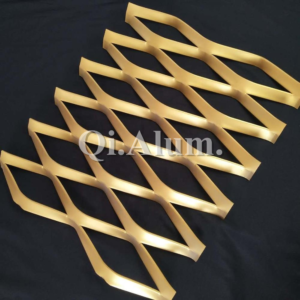
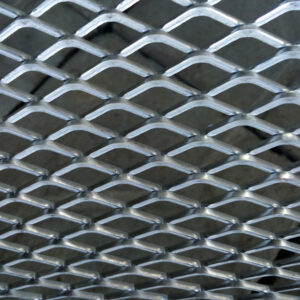
Unlike solid aluminum ceiling panels, expanded metal mesh contains continuous diamond-shaped or other patterned openings that allow light to travel through the ceiling.
The most important parameter is the open area percentage.
For example, consider three expanded aluminum mesh designs:
| Open Area | Light Transmission Characteristics | Typical Application |
|---|---|---|
| 30–40% | More screening and stronger visual concealment | Decorative ceilings with hidden services |
| 40–60% | Balance between transparency and visual coverage | Offices, retail stores, public interiors |
| 60–75% | Greater visibility and potential direct light transmission | Backlit ceilings, exhibition halls, shopping malls |
These percentages describe geometric open area, not measured optical transmittance. Actual light transmission depends on the lighting angle, mesh thickness, strand geometry, and surface finish.
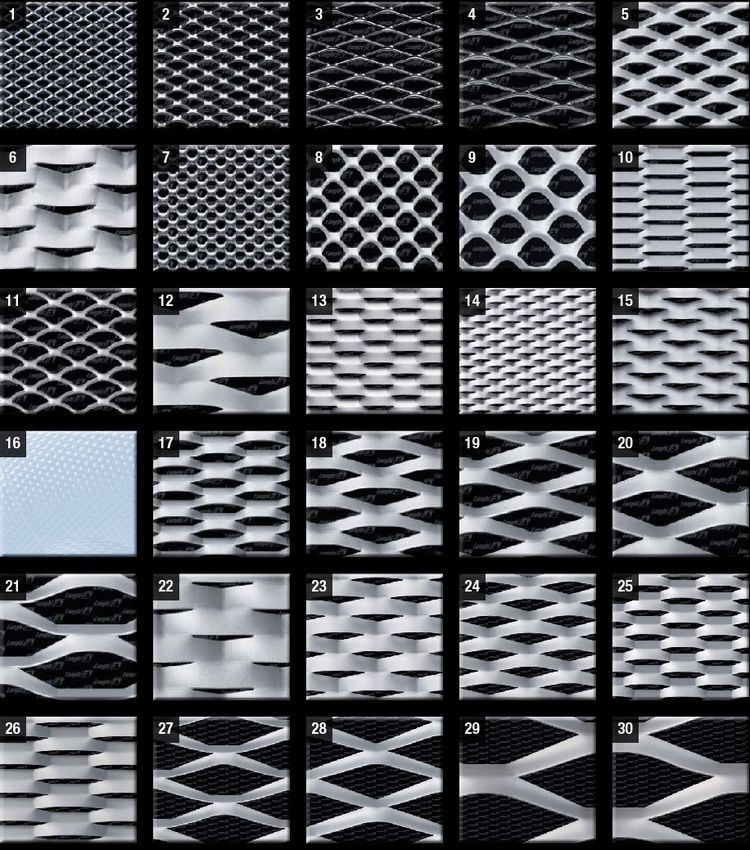
Why Does Mesh Direction Affect Lighting?
Two ceilings with identical opening dimensions can produce noticeably different lighting effects.
When expanded aluminum mesh is installed with its raised strands facing a particular direction, the strands may partially block light arriving from an angle.
Flattened expanded metal generally creates a different light distribution because its strands lie in a more uniform plane.
For architects designing illuminated ceilings, mesh orientation should therefore be considered during the sample approval stage.
2. Can Expanded Aluminum Mesh Ceilings Improve Indoor Lighting?
Yes, particularly when lighting fixtures are installed above the mesh ceiling.
A conventional solid ceiling usually requires dedicated openings for recessed lighting. An expanded metal mesh ceiling can allow some light to pass directly through the mesh surface.
This creates several interesting design possibilities.
Backlit Expanded Metal Ceilings
LED lighting installed above the mesh can create a luminous ceiling surface.
Depending on the distance between the LEDs and the mesh, the result may be a soft glow or a more dramatic pattern of visible light and shadow.
For a more uniform appearance, designers can incorporate diffusers and provide sufficient space between the light source and the mesh.
Combining Natural Light and Metal Mesh
In atriums, skylight areas, and other naturally illuminated interiors, expanded aluminum mesh can help preserve visual openness.
However, it does not increase the amount of daylight entering a building. Its advantage is that it can obstruct less light than an opaque ceiling, depending on its geometry.
Does Mesh Color Matter?
Yes.
- White or light-colored finishes can reflect more incident light.
- Black finishes can make the ceiling appear visually deeper and conceal overhead equipment.
- Metallic finishes can create highlights and reflections under directional lighting.
For projects where light transmission is critical, architects should request physical mesh samples and evaluate them under the intended lighting conditions.
3. Does Expanded Aluminum Mesh Actually Absorb Sound?
This is where many ceiling specifications become misleading.
Expanded aluminum mesh itself is not normally an effective sound-absorbing material.
Aluminum is a relatively rigid, reflective material. Although sound waves can pass through mesh openings, the metal strands do not provide the same acoustic absorption as mineral wool, fiberglass, or other porous acoustic materials.
The real acoustic advantage comes from combining expanded aluminum mesh with an appropriate sound-absorbing system.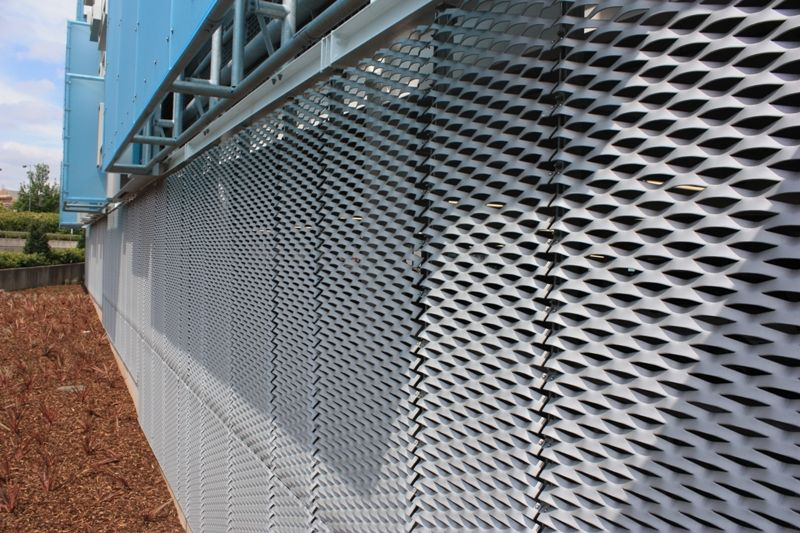
How an Acoustic Expanded Metal Ceiling Works
A typical acoustic expanded metal ceiling may include:
- An exposed expanded aluminum mesh panel.
- A black acoustic fleece or suitable sound-transparent backing.
- Mineral wool or another acoustic absorber.
- An air cavity above the ceiling, where required by the acoustic design.
Sound waves pass through the mesh openings and enter the absorbing material behind the ceiling.
Within the porous absorber, acoustic energy is dissipated through frictional and thermal losses.
This arrangement allows the mesh to serve as a decorative and protective facing while the backing material performs most of the sound absorption.
4. How Does Open Area Affect Sound Absorption?
A common question from contractors is whether a larger mesh opening automatically provides better acoustic performance.
Not necessarily.
A higher open area generally allows more sound to reach the absorbing material behind the mesh. However, once the mesh provides sufficient acoustic transparency, increasing the opening size may produce little additional benefit.
The acoustic result also depends on:
- Thickness and airflow resistivity of the absorber.
- Distance between the mesh and the absorber.
- Ceiling cavity depth.
- Frequency range of the noise.
- Whether the backing obstructs the mesh openings.
For example, a ceiling with 60% open area and a suitable acoustic absorber may perform better than a ceiling with 75% open area but no acoustic backing.
The complete ceiling assembly should be evaluated rather than judging acoustic performance from the mesh opening percentage alone.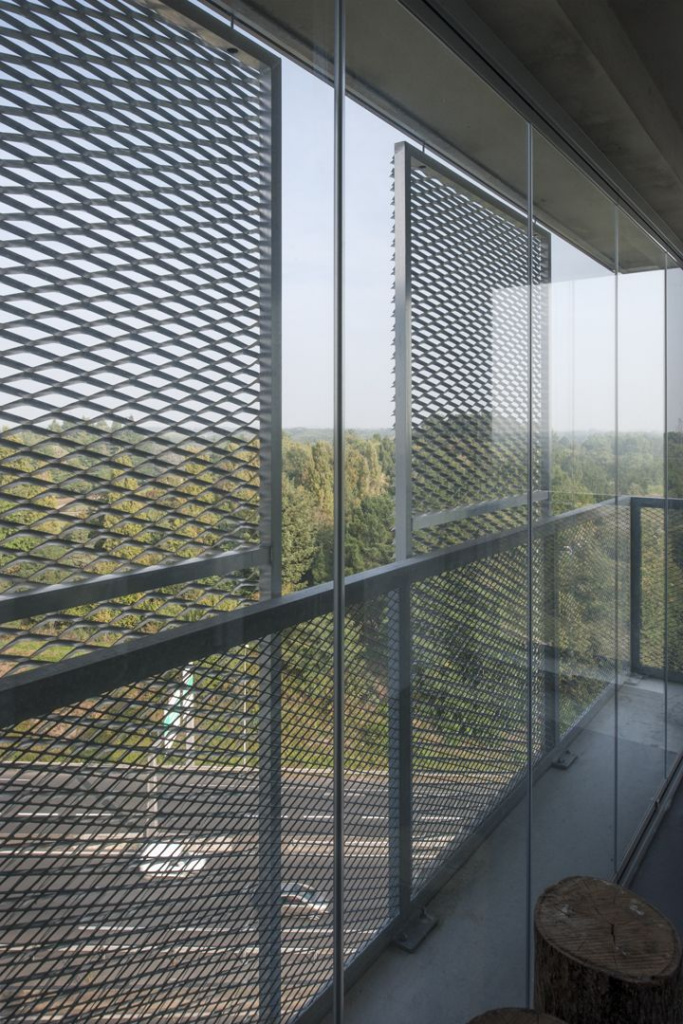
5. What NRC Can an Expanded Aluminum Mesh Ceiling Achieve?
The Noise Reduction Coefficient (NRC) is a single-number rating used to describe sound absorption over selected speech-related frequencies.
A bare expanded aluminum mesh ceiling should not be assigned a high NRC simply because it has many openings.
When combined with tested acoustic materials, a complete expanded metal ceiling system may achieve useful sound absorption.
For example, certain tested porous-absorber ceiling assemblies can achieve NRC ratings around 0.70–0.90 or higher, but these values cannot be assumed for an arbitrary expanded mesh ceiling.
The actual rating must come from acoustic laboratory testing of the specified assembly.
For commercial projects, contractors should request an acoustic test report, such as one based on ASTM C423 or ISO 354, with the relevant NRC or weighted sound absorption coefficient.
6. How to Balance Light Transmission and Acoustic Performance
The most interesting challenge is that architectural lighting and sound absorption do not always require the same ceiling construction.
A highly transparent ceiling may expose the building services above it.
Meanwhile, installing dense acoustic insulation immediately behind the mesh can block light coming from overhead fixtures.
This creates a design trade-off.
| Design Priority | Recommended Approach |
|---|---|
| Maximum lighting visibility | Higher open area with carefully positioned LEDs |
| Sound absorption | Acoustically transparent mesh with tested absorber backing |
| Concealed building services | Moderate open area and dark-colored mesh |
| Both lighting and acoustics | Separate lighting zones and acoustic backing zones |
| Decorative ceiling appearance | Select mesh pattern, strand profile, and finish together |
A Practical Design Solution
For a hotel lobby, designers might install expanded aluminum mesh with integrated linear LED lighting.
Instead of covering the entire ceiling with acoustic insulation, acoustic backing can be placed in selected areas while leaving appropriate zones for lighting.
This approach can maintain the decorative effect of the mesh while introducing meaningful acoustic treatment.
However, the final absorption performance depends on how much of the ceiling area contains effective acoustic treatment.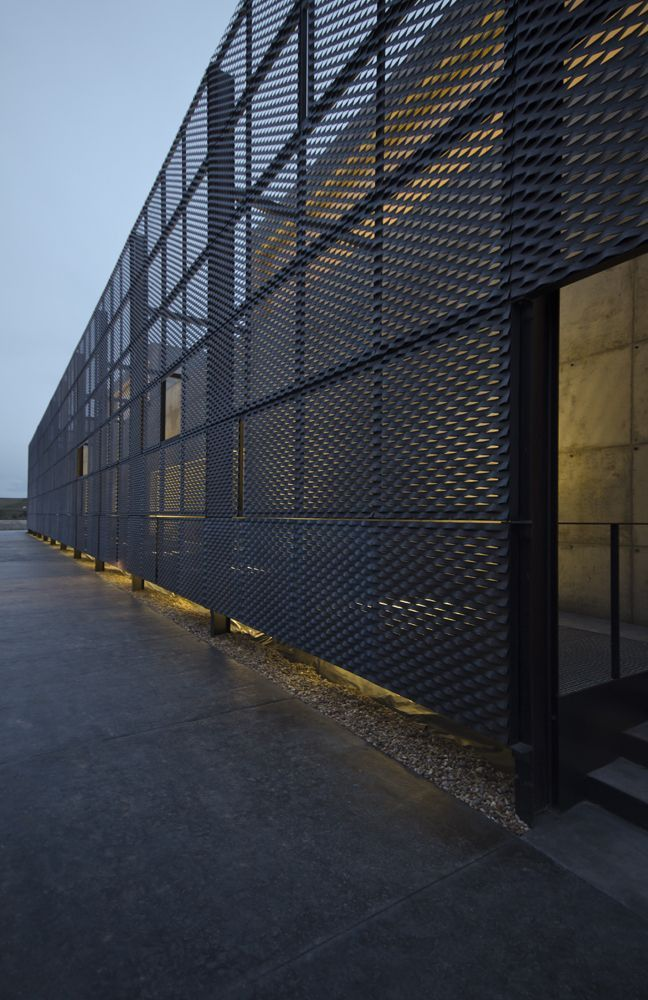
7. Raised vs. Flattened Expanded Aluminum Mesh for Ceilings
Expanded aluminum mesh is available in different strand configurations.
Raised Expanded Aluminum Mesh
Raised mesh retains the three-dimensional geometry created during the expanding process.
Its angled strands can produce stronger shadows and a more textured ceiling appearance.
It is often selected for architectural ceilings where visual depth is important.
Flattened Expanded Aluminum Mesh
Flattened mesh undergoes an additional flattening process.
Its flatter surface can provide a cleaner, more uniform appearance.
For lighting applications, flattened mesh may offer a more predictable visual pattern, although actual light transmission still depends on the mesh dimensions and viewing angle.
Neither type should be considered acoustically superior without testing the complete ceiling assembly.
8. Where Are Expanded Aluminum Mesh Ceilings Most Effective?
Airports and railway stations
Expanded aluminum mesh ceilings can accommodate large architectural ceiling areas while allowing access to mechanical and electrical services. Acoustic backing can help control reverberation in busy passenger spaces.
Shopping malls
Decorative expanded metal ceilings can combine suspended lighting, ventilation, and distinctive ceiling patterns. Different mesh finishes can also help define retail zones.
Open-plan offices
Expanded aluminum mesh ceilings with acoustic absorbers may help reduce reflected sound and improve the acoustic environment, especially in spaces with hard floors and glass partitions.
Restaurants and hotel lobbies
Mesh ceilings can create a layered lighting effect while supporting an acoustic design intended to reduce excessive reverberation.
Exhibition halls and commercial showrooms
Larger mesh openings can provide visual openness and allow overhead lighting systems to remain visible as part of the interior design.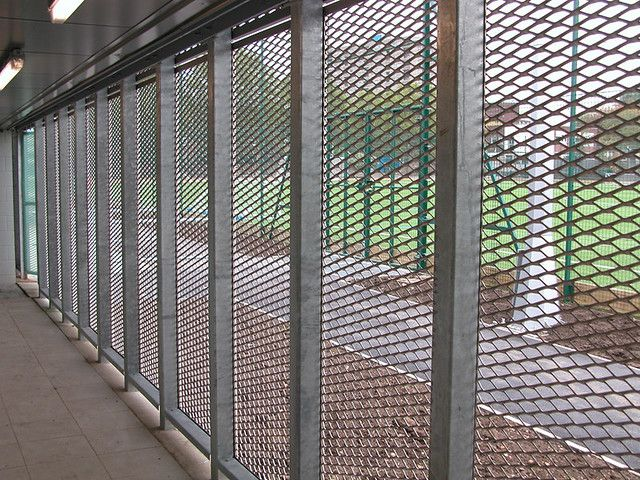
9. What Should Contractors Confirm Before Ordering?
Before purchasing an architectural expanded aluminum mesh ceiling, contractors should verify the following technical details:
- Mesh dimensions: Long way of diamond (LWD), short way of diamond (SWD), strand width, and thickness.
- Open area percentage: Confirmed from the actual mesh geometry.
- Panel dimensions: Coordinated with ceiling framing, access requirements, and installation tolerances.
- Surface finish: Powder coating, anodizing, or other specified finishes.
- Lighting design: Fixture locations, light distribution, and potential glare.
- Acoustic backing: Material type, thickness, and tested acoustic performance.
- Installation system: Support spacing, panel fixing, and access panel details.
For larger ceiling projects, a full-size sample is particularly valuable.
A small mesh sample may show the color and opening shape, but it cannot fully demonstrate lighting uniformity, ceiling visibility, or the appearance of panel joints.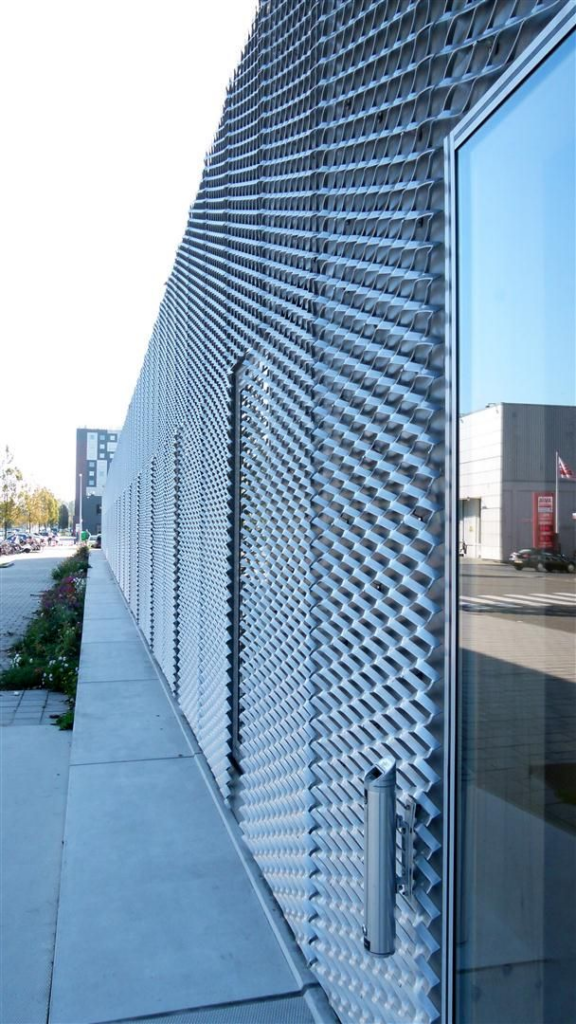
10. Can Expanded Aluminum Mesh Replace Conventional Acoustic Ceiling Panels?
It can be an alternative architectural finish, but it is not automatically a direct acoustic replacement.
Traditional acoustic ceiling tiles often incorporate sound-absorbing material within the tile itself.
Expanded aluminum mesh relies primarily on the acoustic materials installed behind it.
Therefore, the decision should be based on the complete ceiling system, not just the exposed metal panel.
Where design flexibility, ventilation, access, and visual transparency are important, expanded aluminum mesh offers architectural possibilities that conventional opaque ceiling tiles cannot provide.
Work With an Expanded Aluminum Mesh Ceiling Manufacturer
At Foshan Qi Aluminum Decorative Materials Co., Ltd., we manufacture architectural expanded aluminum mesh panels for ceiling decoration, wall cladding, building facades, and commercial interior projects.
We can support project-specific requirements, including:
- Expanded aluminum mesh opening patterns and dimensions.
- Aluminum panel sizes and fabrication details.
- Powder-coated finishes and color selection.
- Architectural drawings and installation coordination.
- Project samples for appearance and dimensional approval.
For ceiling projects involving acoustic treatment or integrated lighting, we can coordinate mesh specifications with the project’s acoustic and lighting requirements.
Website: https://aluminum-panel.com/
Email: [email protected]
WhatsApp: +86 13542961174
Final Thoughts
The performance of an expanded aluminum mesh ceiling depends on how the entire system is designed.
For lighting, the key factors are mesh open area, strand orientation, surface finish, and fixture positioning.
For sound absorption, the decisive factors are the acoustic backing material, cavity design, and tested performance of the complete assembly.
The most successful projects do not simply choose the mesh with the largest openings. They select a mesh pattern that balances visual transparency, lighting quality, acoustic comfort, and architectural appearance.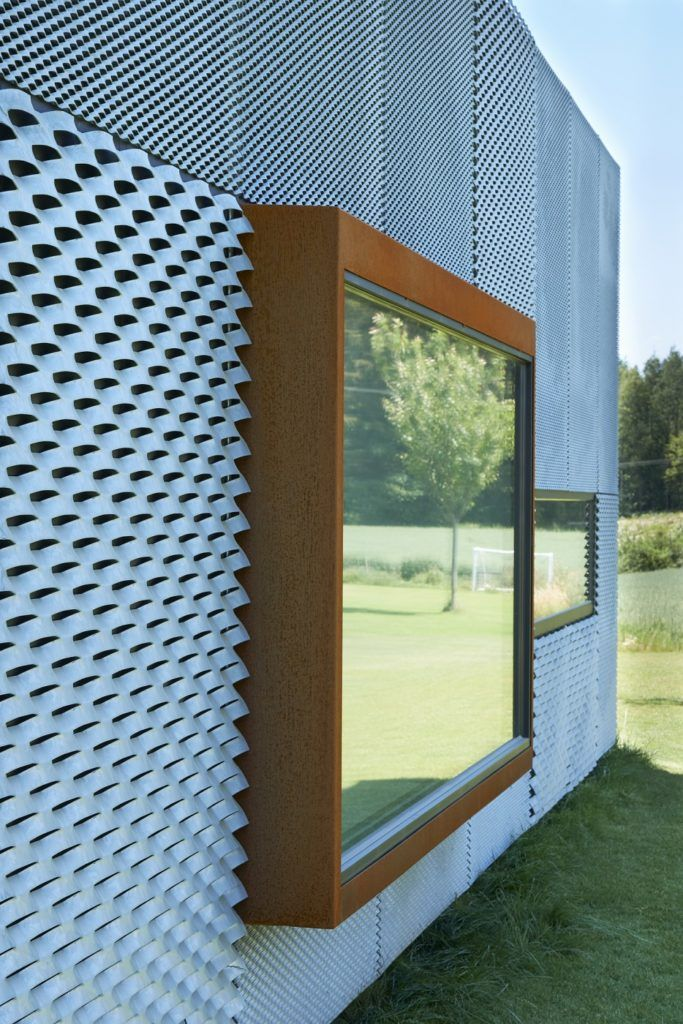

About us:
Foshan Qi Aluminum Decorative Materials Co.,Ltd, more than 12 years experience. We are manufacturer of fabricating aluminum perforated sheets, aluminum solid panels, aluminum screen,aluminum facade decorative sheets, aluminum expanded mesh, aluminum ceiling with good quality and fast delivery for more than 10 years to export countries. Our monthly supplying is about 80000 sqms for inside and outside market. Our projects covers five star hotel, high end villas, school, campus, metro station, airport, office building, shopping mall and some other goverment projects. We can provide design, fabrication and installation one stop service for your projects. High precision, quality guarantee, affordable price, globla delivery and considerate service is our basis. We accept OEM/ODM business. We are the experienced specialist on facade solution decoration!!!