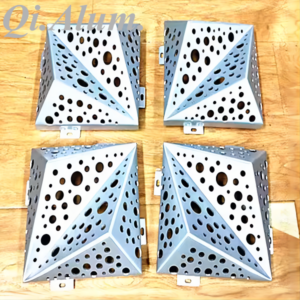
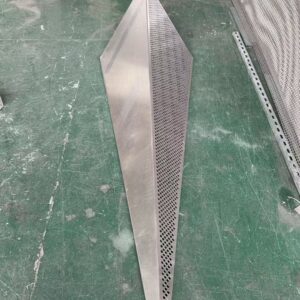
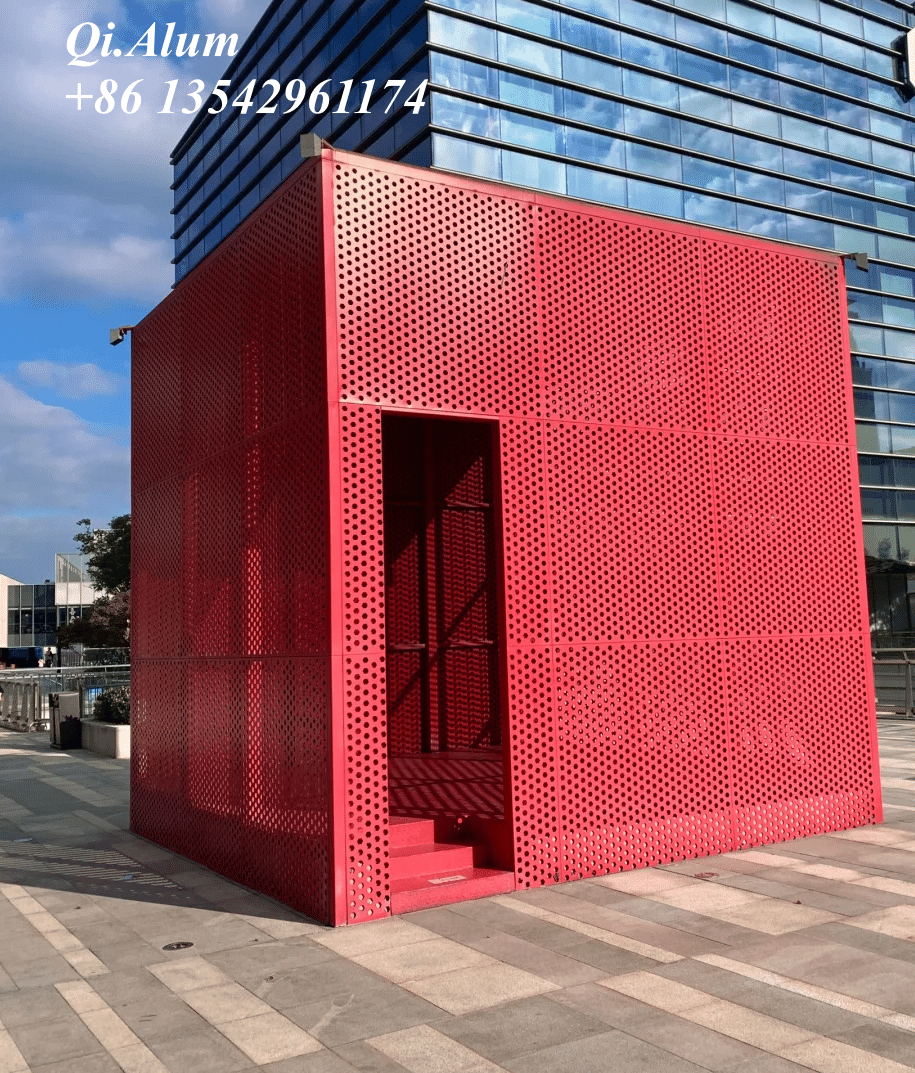
Description
Evaluating Custom Perforated Aluminum Panel Suppliers: Bending, Tolerances, and Deburring Standards
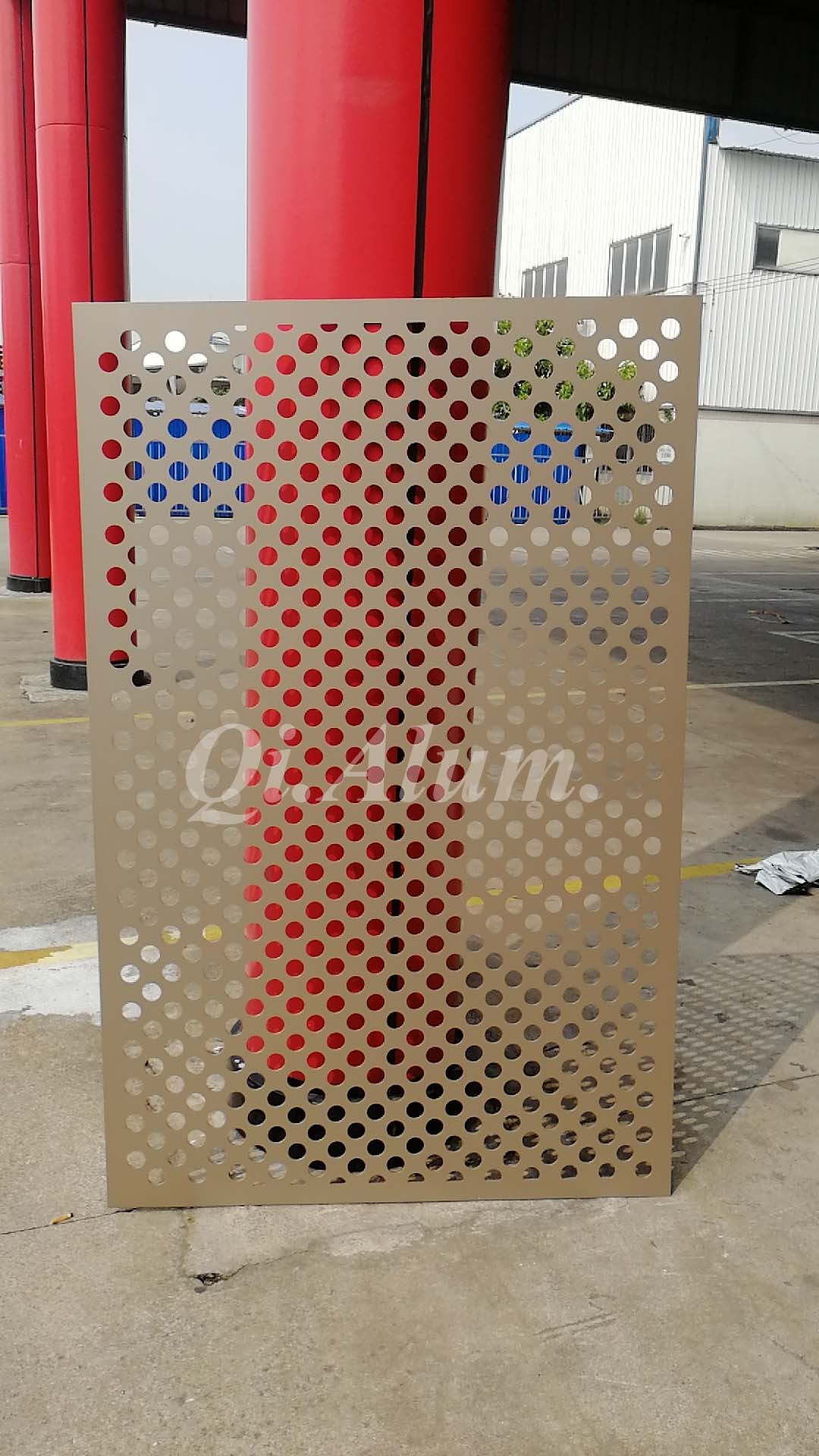
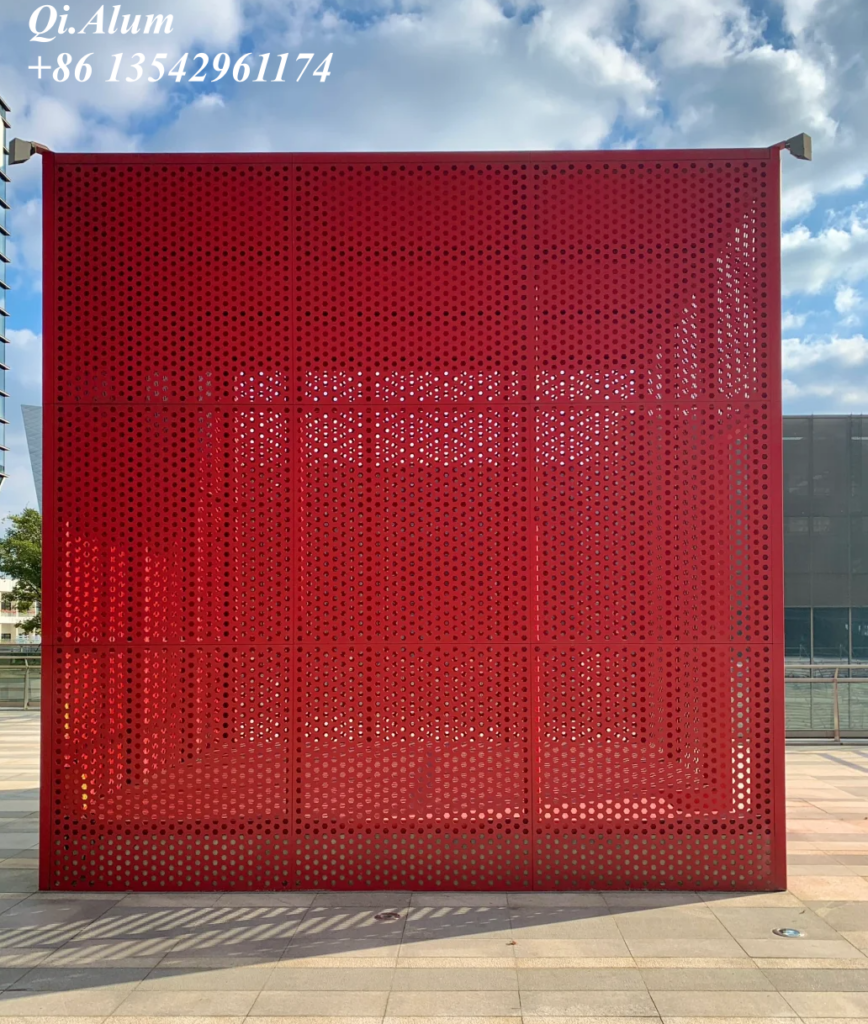
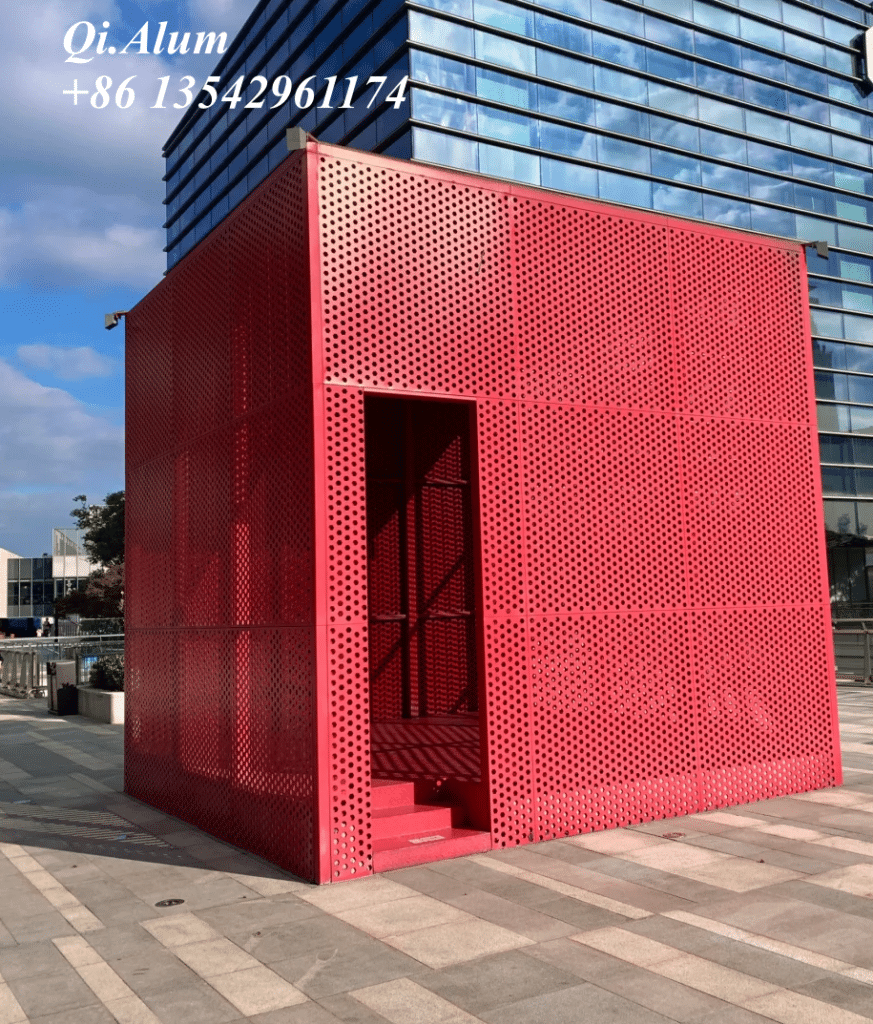
Selecting a manufacturing partner for custom perforated aluminum panels requires looking beyond basic price-per-square-meter quotes. In architectural facades, acoustic wall systems, and specialized metal cladding, precision bending, strict dimensional tolerances, and meticulous deburring dictate whether panels align effortlessly on-site or cause major installation delays.
When auditing custom metal fabricators, technical execution across these three core fabrication processes serves as the reliable benchmark for quality. Leading manufacturers, such as Foshan Qi Aluminum Decorative Materials Co., Ltd., integrate high-precision CNC machinery and strict quality management (ISO 9001:2015) to maintain consistency across large-scale architectural orders.
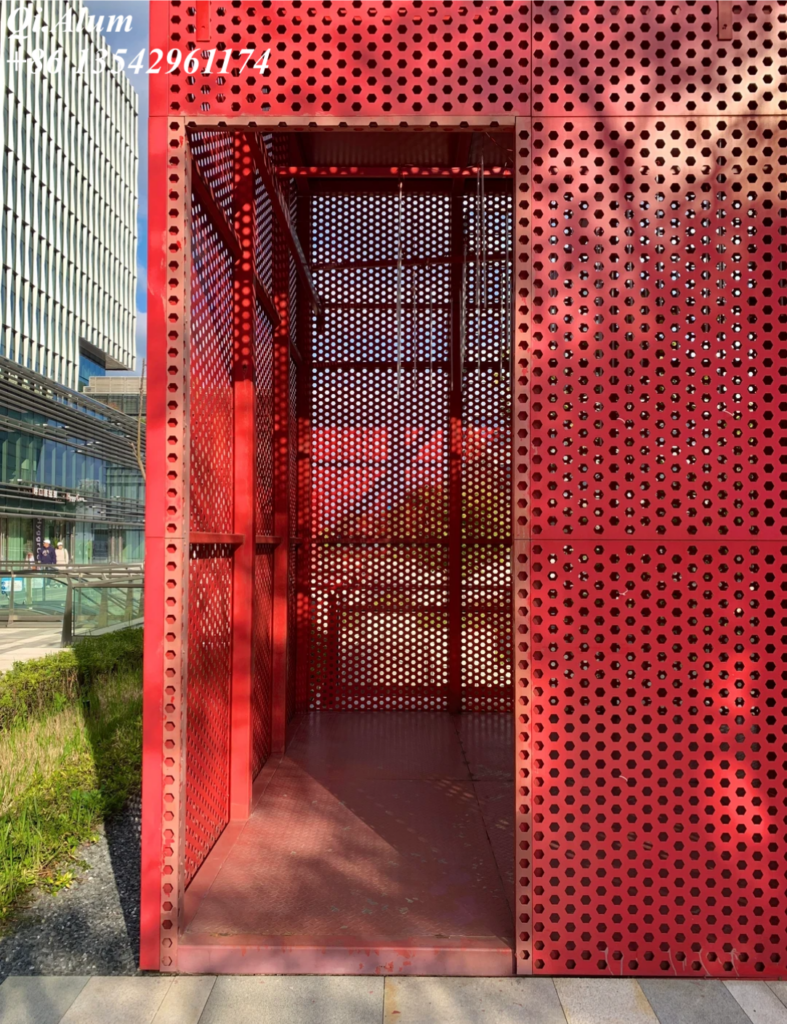
1. Bending and Forming Precision
Perforating metal fundamentally alters its structural behavior. When perforated sheet metal undergoes press brake bending, the open hole patterns respond differently than solid metal margins. An experienced supplier must proactively manage these mechanical stresses.
-
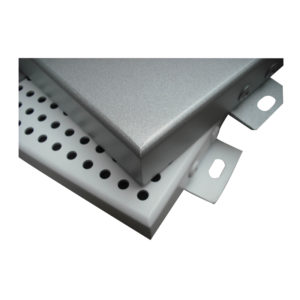
Margin Alignment Along Bend Lines: Bending directly across an open perforation zone distorts hole geometry, resulting in ovaling and uneven flange heights. Advanced fabricators layout panels so primary bend lines fall along solid, unperforated borders.
-
Springback Control: Aluminum alloys—such as 5052-H32 or 3003-H14—exhibit elasticity and springback during cold forming. Specialized suppliers utilize multi-axis CNC press brakes paired with laser angle-measurement systems to ensure consistent flange angles across 3-meter or 6-meter panel lengths.
-
Minimum Bend Radii: Overly tight inner radii along the metal grain can induce micro-fractures, particularly on exterior architectural panels exposed to wind loads. Proper tooling selection guarantees bend radii match material grade and sheet thickness ($t$).
2. Manufacturing Tolerances & Sheet Flatness
In exterior curtain walls, loose tolerances lead to misaligned shadow lines, joint gaps, and visible oil-canning. When auditing a vendor, compare their factory standards against recognized international quality tiers:
| Parameter | Standard Commercial Tolerance | High-Precision Architectural Standard | Inspection Method |
| Overall Dimensions (L x W) | $\pm1.5\text{ mm}$ | $\pm0.5\text{ mm}$ | CNC Laser / Turret Shearing Gauge |
| Diagonal Squareness | $\leq 2.0\text{ mm}$ variance | $\leq 1.0\text{ mm}$ variance | Corner-to-corner cross-measurement |
| Pitch & Center Distance | $\pm0.5\text{ mm}$ | $\pm0.2\text{ mm}$ | Optical coordinate measurement |
| Flange Angle Accuracy | $\pm1.0^\circ$ | $\pm0.5^\circ$ | Digital protractor / laser tracking |
| Post-Perforation Flatness | $\leq 3.0\text{ mm/m}$ | $\leq 1.0\text{ mm/m}$ | Roller leveling verification |
Critical Quality Factor: Punching thousands of holes introduces localized thermal and mechanical stress, causing raw sheets to bow or warp. Industrial producers rely on heavy-duty multi-roll precision levelers to eliminate internal stress and restore dead-flat flatness prior to bending and coating.
3. Deburring and Surface Finishing
High-speed turret punching or CNC milling creates burrs on sheet undersides and hole perimeters. Left unaddressed, burrs degrade paint adhesion, impair mechanical fit, and present handling hazards.
-
Automated Edge Rounding: While basic workshops rely on manual hand-sanding, modern processing lines utilize continuous automated brush deburring systems. These machines apply uniform edge rounding ($R \ge 0.2\text{ mm}$) across every perforation edge in a single pass.
-
Coating Integrity: During curing, liquid PVDF paint and powder coatings naturally pull away from sharp $90^\circ$ edges due to surface tension. Smoothly rounded edges ensure full paint thickness over hole rims, preventing premature oxidation or filiform corrosion in outdoor environments.
-
Pre-Treatment Cleanliness: Following deburring, comprehensive degreasing and pre-treatment wash cycles remove micro-fine aluminum powder and punching lubricants, creating a clean substrate for high-performance fluorocarbon (AAMA 2605) or polyester finishes.
Supplier Evaluation Audit Checklist
To verify a fabrication partner during a plant inspection or technical evaluation, consider these direct criteria:
-
Processing Sequence: Are panels laser-cut or sheared after perforation to ensure exact edge-to-hole margins?
-
Leveling Technology: Does the facility operate dedicated multi-roll tension levelers to correct sheet distortion post-punching?
-
Forming Capability: Are press brakes equipped with long-bed CNC control to handle multi-curved or complex hyper-shaped profiles?
-
Deburring Automation: Is deburring performed using automated brush machines to ensure batch-to-batch consistency?
By enforcing clear benchmarks for forming precision, dimensional tolerance, and deburring quality, project teams can select a custom aluminum fabrication partner capable of delivering clean, structural facade panels tailored to exact engineering specifications.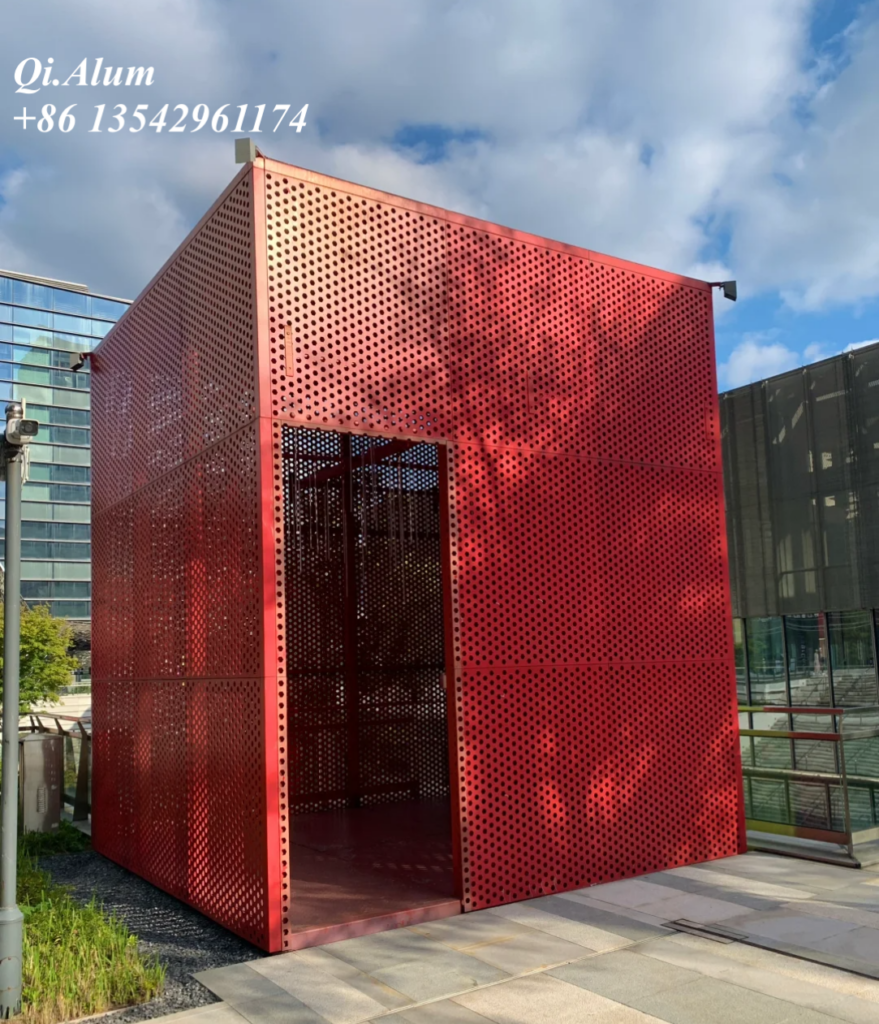
About us:
Foshan Qi Aluminum Decorative Materials Co.,Ltd, more than 12 years experience. We are manufacturer of fabricating aluminum perforated sheets, aluminum solid panels, aluminum screen,aluminum facade decorative sheets, aluminum expanded mesh, aluminum ceiling with good quality and fast delivery for more than 10 years to export countries. Our monthly supplying is about 80000 sqms for inside and outside market. Our projects covers five star hotel, high end villas, school, campus, metro station, airport, office building, shopping mall and some other goverment projects. We can provide design, fabrication and installation one stop service for your projects. High precision, quality guarantee, affordable price, globla delivery and considerate service is our basis. We accept OEM/ODM business. We are the experienced specialist on facade solution decoration!!!