Description
Best Aluminum Decorative Panels for Facades: How to Choose
Choosing the best aluminum decorative panel for a building facade depends on more than appearance. Architects, contractors, developers, and building owners need to consider durability, weather resistance, design flexibility, maintenance, installation, and overall project requirements.
Aluminum decorative panels are widely used for commercial buildings, office buildings, hotels, shopping centers, residential developments, airports, and other architectural projects. With different fabrication techniques and surface finishes available, aluminum panels can be customized to create modern, functional, and distinctive facades.
So, what is the best aluminum decorative panel for a facade?
The answer depends on the architectural design and performance requirements of the project.
What Are Aluminum Decorative Panels for Facades?
Aluminum decorative panels are architectural panels manufactured from aluminum sheet or plate and fabricated into different shapes, patterns, and designs. They can be used as exterior facade cladding, feature walls, sun-shading elements, screens, balcony decorations, and other architectural applications.
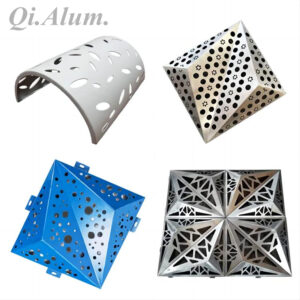
Depending on the design, aluminum decorative panels can be perforated, laser cut, carved, folded, embossed, or formed into three-dimensional shapes.
Common options include:
- Solid aluminum panels
- Perforated aluminum panels
- Laser cut aluminum panels
- Carved aluminum panels
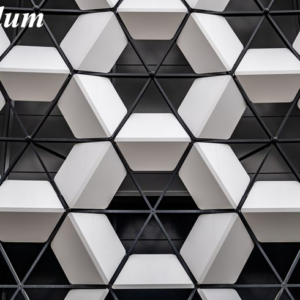
- 3D aluminum panels
- Aluminum screen panels
- Aluminum facade cladding panels
The right option depends on whether the main priority is appearance, privacy, ventilation, solar shading, structural performance, or a combination of these factors.
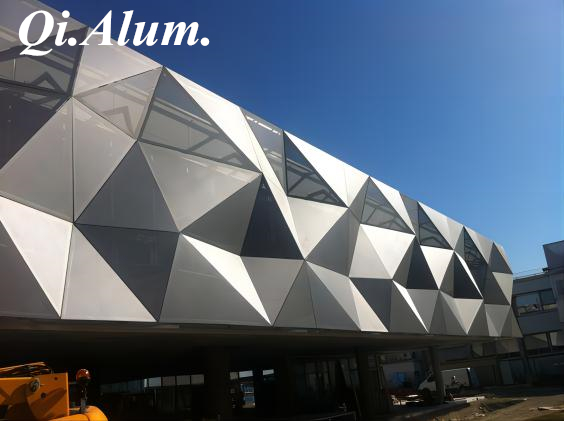
1. Solid Aluminum Panels for Clean and Modern Facades
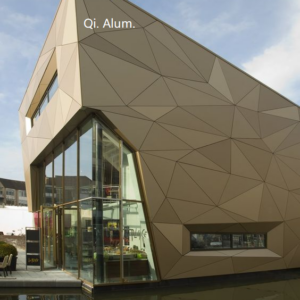
Solid aluminum panels are one of the most versatile choices for building facades. They provide a smooth and continuous appearance and can be manufactured in different sizes, shapes, colors, and finishes.
They are suitable for projects that require:
- Clean architectural lines
- Large flat facade areas
- Custom shapes and folded edges
- Long-term exterior use
- Different color and surface finishes
Solid aluminum panels can also be fabricated into curved, folded, or irregular shapes for more complex architectural designs.
For exterior facades, the appropriate aluminum alloy and thickness should be selected according to the panel size, wind load, support system, and project requirements.
2. Perforated Aluminum Panels for Ventilation and Sun Shading
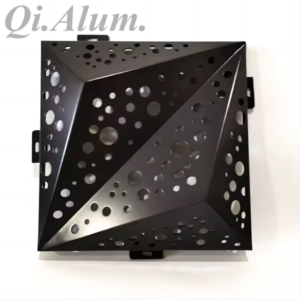
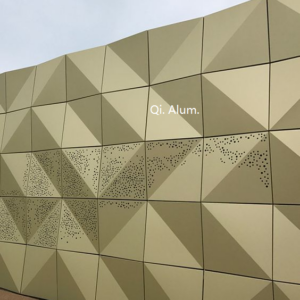
Perforated aluminum panels contain regularly arranged holes or customized perforation patterns. They are particularly suitable when the facade needs ventilation, solar control, privacy, or visual depth.
Perforated panels can be designed with different:
- Hole diameters
- Hole shapes
- Perforation patterns
- Open-area ratios
- Panel sizes
- Colors and finishes
They are commonly used for parking garages, balconies, commercial facades, mechanical equipment screens, and sun-shading systems.
One major advantage is that the perforation pattern can combine decorative design with functional performance.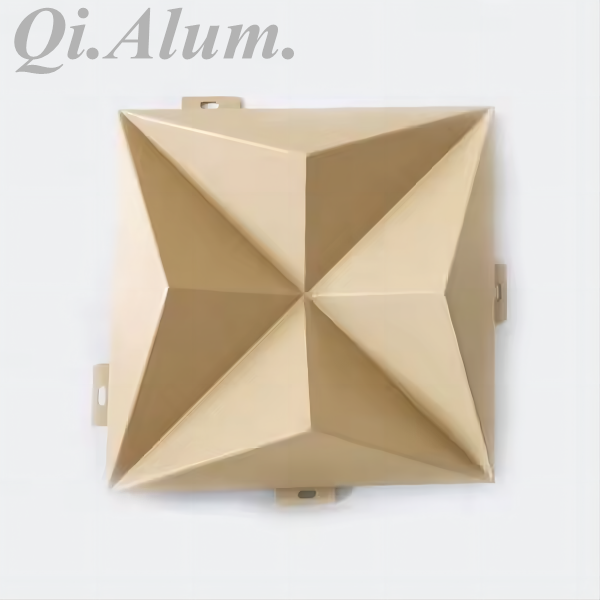
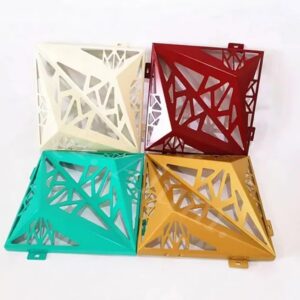
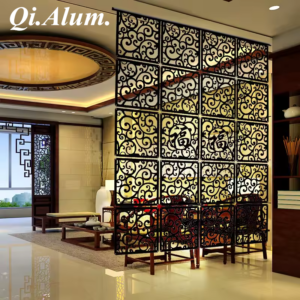
3. Laser Cut Aluminum Panels for Customized Patterns
Laser cut aluminum panels are an excellent choice when the facade requires a specific decorative pattern, logo, geometric design, or artistic element.
Unlike standard perforation, laser cutting allows highly customized patterns to be produced from architectural drawings or digital design files.
Laser cut aluminum panels are often used for:
- Decorative facade screens
- Privacy screens
- Entrance features
- Balcony screens
- Interior and exterior partitions
- Feature walls
- Architectural branding
For projects with unique architectural concepts, laser cut panels provide greater design flexibility.
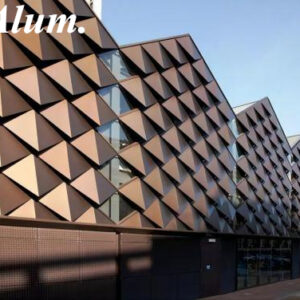
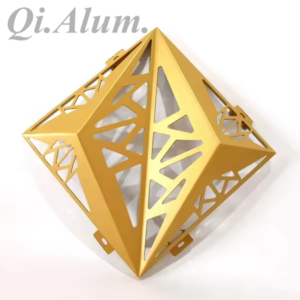
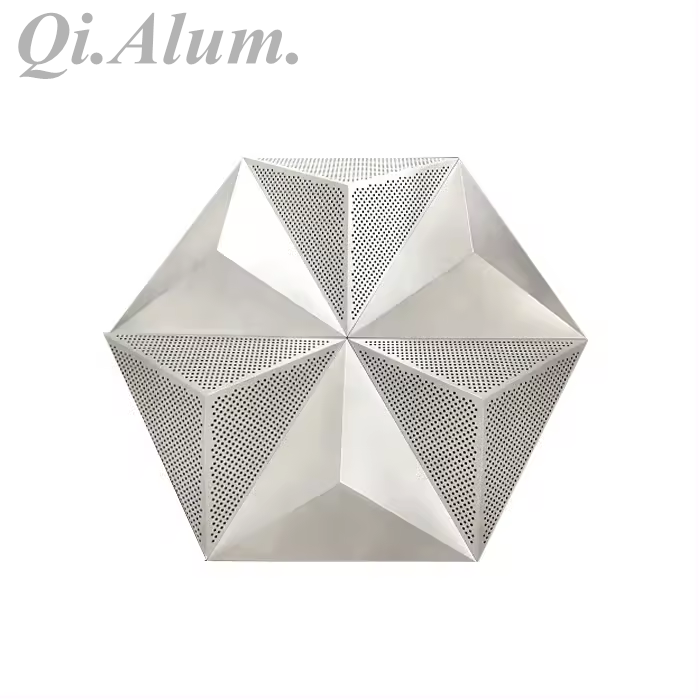
4. 3D Aluminum Panels for Architectural Depth
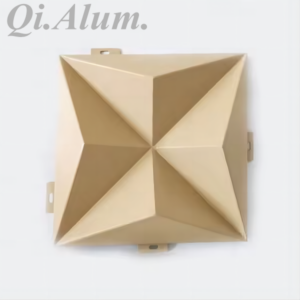
If the goal is to create a strong three-dimensional appearance, 3D aluminum panels can be an effective solution.
Through forming, bending, embossing, or other fabrication processes, aluminum panels can be transformed into geometric or sculptural surfaces.
3D aluminum facade panels can create:
- Shadow and light effects
- Repeating geometric patterns
- Textured facade surfaces
- Sculptural architectural elements
- Dynamic visual effects
They are particularly suitable for modern commercial buildings, hotels, cultural buildings, and landmark projects where the facade is intended to become a major visual feature.
5. Aluminum Screen Panels for Privacy and Solar Control
Decorative aluminum screen panels can provide both architectural decoration and practical functionality.
When installed in front of windows, balconies, or open areas, screens can help improve privacy while reducing direct sunlight. Depending on the opening pattern, they can also allow air circulation and create a semi-transparent facade effect.
Aluminum screens are commonly used for:
- Balconies
- Windows
- Parking areas
- Building entrances
- Outdoor partitions
- Sun-shading systems
The pattern and opening ratio can be customized according to the required level of privacy and sunlight control.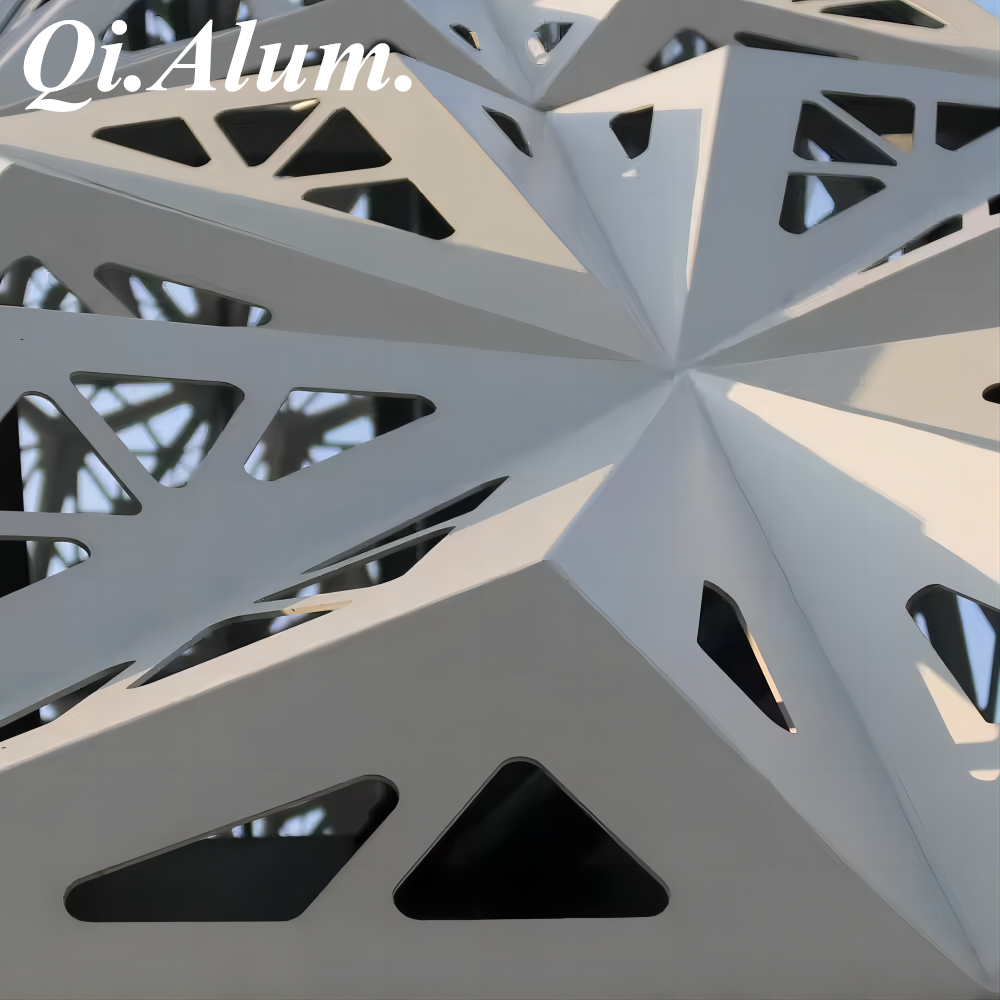
What Aluminum Finish Is Best for Exterior Facades?
The surface finish is another important consideration when selecting aluminum decorative panels.
Common finishes include:
Powder Coating
Powder coating is widely used for architectural aluminum because it offers a broad range of colors and surface textures.
It is suitable for projects requiring customized colors and consistent appearance across multiple panels.
PVDF Coating
PVDF coating is commonly selected for demanding exterior applications because of its resistance to weathering, UV exposure, and color fading.
For large commercial facade projects and buildings exposed to strong sunlight or harsh outdoor conditions, PVDF coating can be an appropriate option.
Wood Grain Finish
Wood grain finishes can create the appearance of natural timber while maintaining the advantages of aluminum.
They are often used when architects want a warm, natural appearance without using actual wood as the exterior facade material.
Anodized Finish
Anodized aluminum provides a distinctive metallic appearance and can be used for modern architectural designs.
The final finish should be selected according to the project location, exposure conditions, desired appearance, maintenance requirements, and expected service life.
How to Choose the Best Aluminum Decorative Panel for a Facade
Before selecting a panel, several factors should be evaluated.
1. Consider the Building Location
The environmental conditions of the project are important.
Buildings in coastal areas may be exposed to high levels of salt spray, while buildings in regions with intense sunlight may require stronger UV and weather resistance.
The material, coating system, and installation details should therefore be selected according to the local environment.
2. Consider the Panel Size and Thickness
Larger panels may require greater thickness or additional reinforcement to control deflection and maintain panel stability.
The appropriate specification depends on:
- Panel dimensions
- Wind load
- Support spacing
- Installation system
- Building height
- Local building codes
A professional facade supplier should review the project drawings and engineering requirements before confirming the final specification.
3. Consider the Design Requirements
Different fabrication methods create different visual effects.
For example:
Solid panels are suitable for clean and continuous surfaces.
Perforated panels are suitable for ventilation, privacy, and solar shading.
Laser cut panels are suitable for highly customized patterns.
3D panels are suitable for creating depth and architectural texture.
Screen panels are suitable for decorative screening and semi-transparent facade applications.
4. Consider Maintenance Requirements
One of the advantages of aluminum facade panels is relatively simple maintenance.
However, the maintenance requirements still depend on the coating system, environment, panel design, and installation details.
Proper material selection and professional fabrication can help maintain the appearance and performance of the facade over time.
Why Aluminum Is a Popular Material for Decorative Facades
Aluminum is widely used in architectural facade applications because it offers a combination of design flexibility, durability, and relatively low weight.
Key advantages include:
- Flexible fabrication
- Wide range of colors and finishes
- Resistance to outdoor exposure
- Easy customization
- Modern architectural appearance
- Suitable for complex patterns
- Relatively low maintenance
- Compatibility with different facade systems
Aluminum can also be processed using CNC cutting, laser cutting, bending, punching, welding, and other fabrication techniques, making it suitable for both standard and highly customized facade designs.
Why Choose Foshan Qi Aluminum Decorative Materials Co., Ltd.?
Foshan Qi Aluminum Decorative Materials Co., Ltd. specializes in aluminum architectural and decorative materials for building projects.
We provide customized aluminum solutions including solid aluminum panels, perforated panels, laser cut panels, decorative screens, 3D panels, facade panels, and other architectural aluminum products.
Our services can cover the process from design drawings and material selection to fabrication, surface finishing, packaging, and international delivery.
Depending on project requirements, available surface treatments include powder coating, PVDF coating, anodizing, wood grain finishes, brushed finishes, mirror finishes, and other customized treatments.
For international projects, our team can review architectural drawings and recommend suitable aluminum materials, panel thicknesses, fabrication methods, finishes, and installation solutions according to the project requirements.
Final Thoughts
There is no single aluminum decorative panel that is the best for every facade project.
The ideal choice depends on the building design, climate, panel dimensions, wind load, desired appearance, privacy requirements, ventilation, solar shading, coating requirements, and budget.
For a clean and continuous facade, solid aluminum panels are a practical choice. For ventilation and solar control, perforated aluminum panels can be more suitable. For customized patterns, laser cut aluminum panels offer greater design flexibility, while 3D aluminum panels can create a distinctive architectural appearance.
Selecting the right aluminum decorative panel at the design stage can help achieve the desired balance between aesthetics, performance, durability, and project cost.
If you have architectural drawings or facade designs, Foshan Qi Aluminum Decorative Materials Co., Ltd. can help evaluate the requirements and develop a customized aluminum panel solution for your project.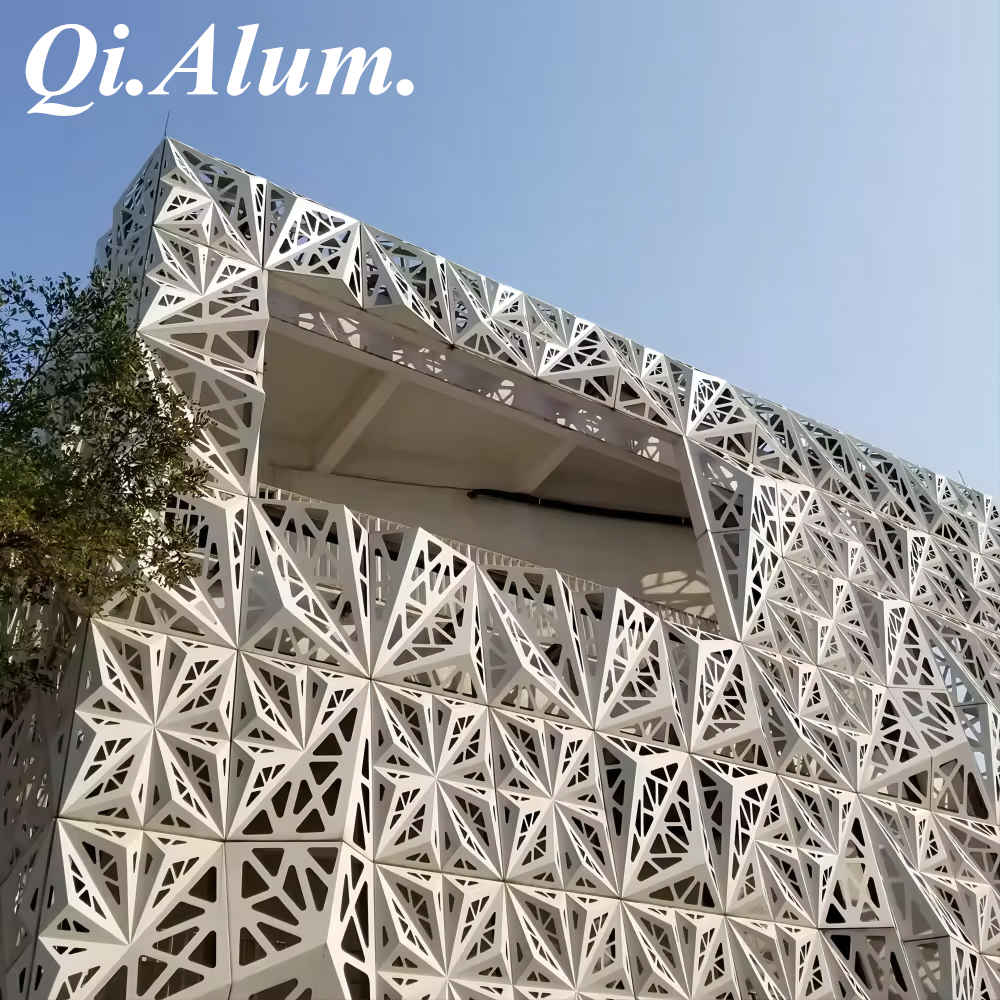
About us:
Foshan Qi Aluminum Decorative Materials Co.,Ltd, more than 12 years experience. We are manufacturer of fabricating aluminum perforated sheets, aluminum solid panels, aluminum screen,aluminum facade decorative sheets, aluminum expanded mesh, aluminum ceiling with good quality and fast delivery for more than 10 years to export countries. Our monthly supplying is about 80000 sqms for inside and outside market. Our projects covers five star hotel, high end villas, school, campus, metro station, airport, office building, shopping mall and some other goverment projects. We can provide design, fabrication and installation one stop service for your projects. High precision, quality guarantee, affordable price, globla delivery and considerate service is our basis. We accept OEM/ODM business. We are the experienced specialist on facade solution decoration!!!