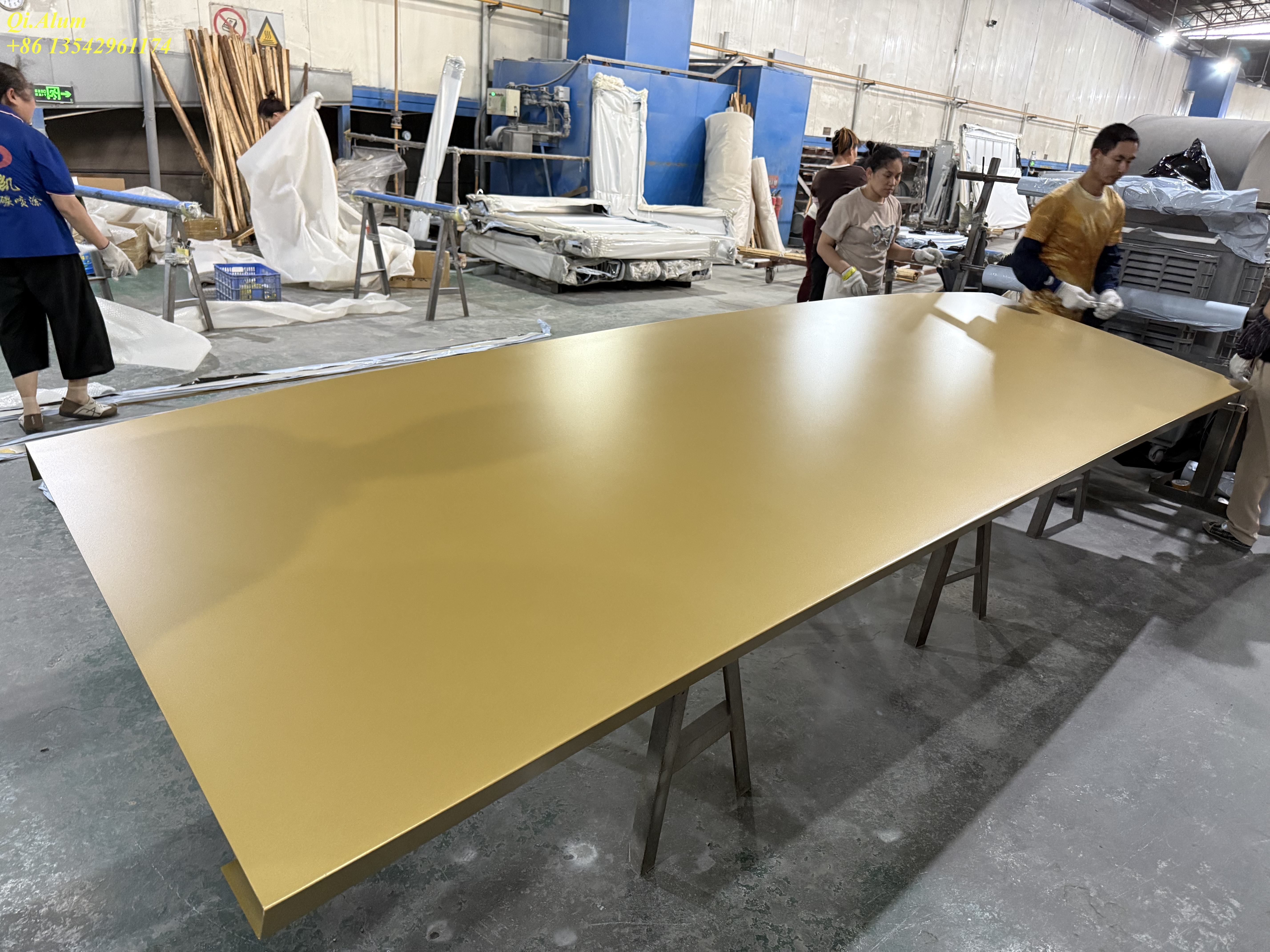
Description
How to Avoid Mismatched Deliveries When Purchasing Aluminum Curtain Wall Panels: Watch Out for These Common Appearance Defects and Thickness Traps
When sourcing aluminum curtain wall panels for large-scale architectural projects, ensuring that the delivered product strictly matches your specifications is critical. “What you see” is not always “what you get.” Discrepancies in material quality, finish, and dimensions can lead to costly project delays, structural safety risks, and legal disputes.
To safeguard your investment, it is essential to know how to spot common appearance defects and navigate the hidden “thickness traps” often encountered in the market.
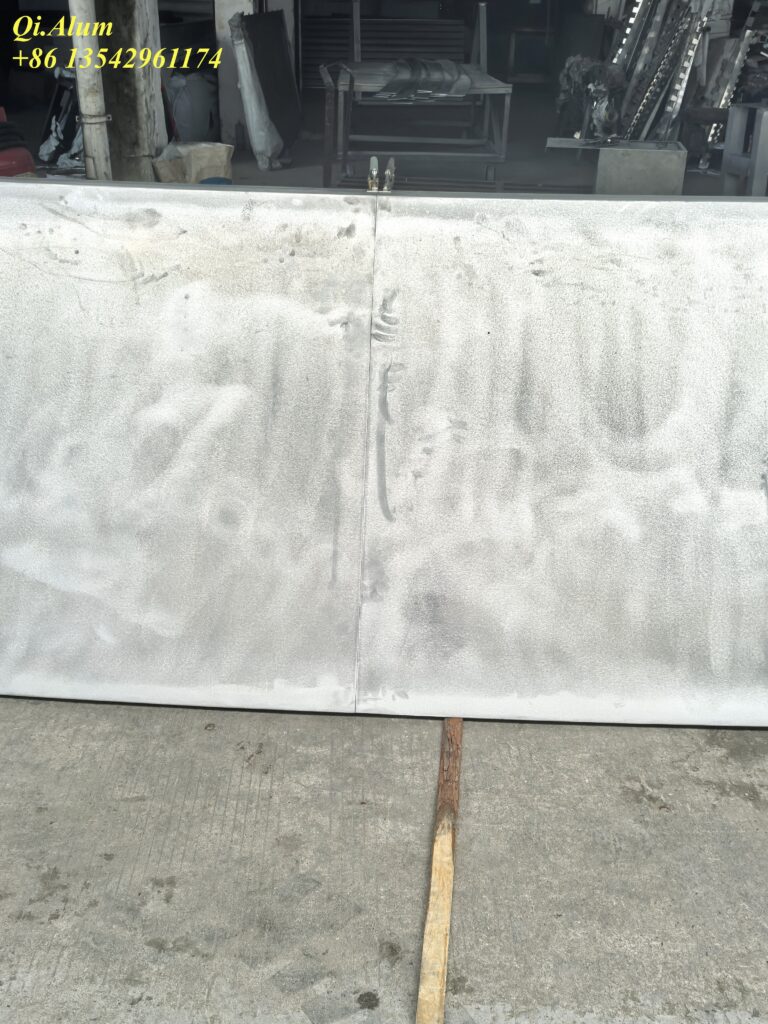
1. Unveiling the “Thickness Traps”
Thickness is a primary factor determining the wind pressure resistance, flatness, and durability of aluminum curtain wall panels. However, it is also one of the most common areas where substandard suppliers cut corners.
-
The “Nominal vs. Actual” Trick: Some suppliers quote the nominal thickness (e.g., 3.0mm) but deliver panels at the lower limit of the allowable tolerance (e.g., 2.75mm or 2.8mm). While technically within some loose national standards, this slight reduction significantly lowers the material cost for the manufacturer while compromising the structural integrity of your facade.
-
Including the Coating Layer: Another frequent trap is measuring the total thickness after painting. A standard PVDF coating can add 0.04mm to 0.06mm. Rogue suppliers use a thinner base aluminum sheet and make up the difference with paint layer thickness.
-
How to Avoid It: Always specify the minimum net thickness of the aluminum substrate (excluding the coating) in your contract. Use digital micrometers to conduct random spot checks upon delivery.
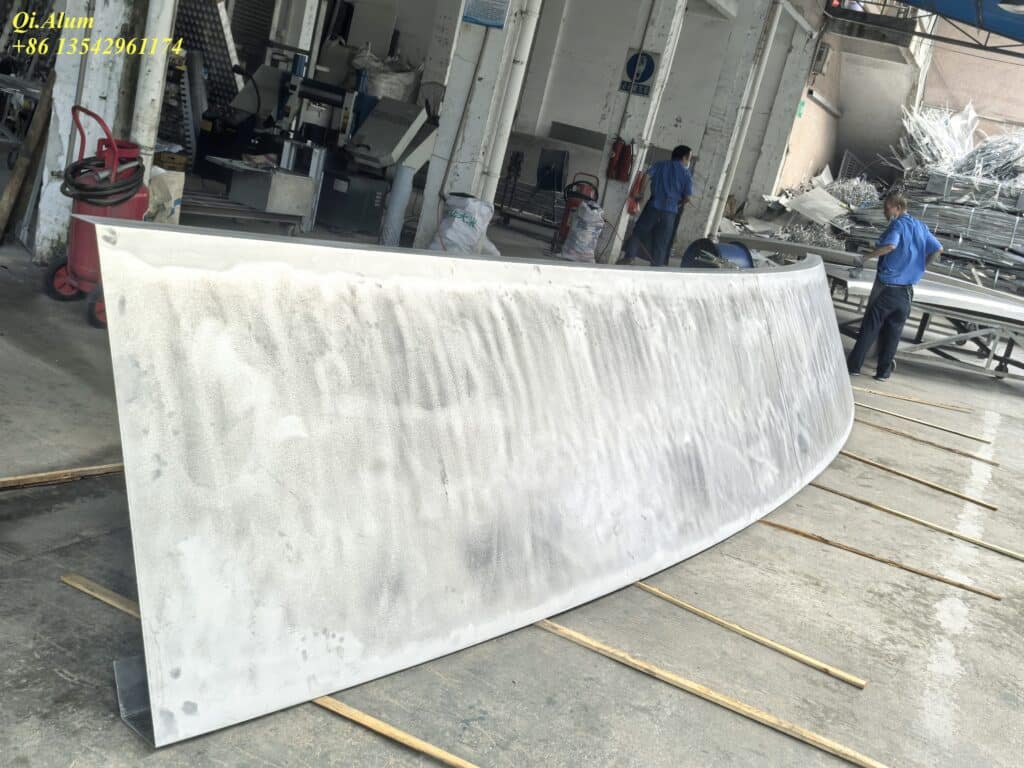
2. Common Appearance Defects to Watch For
The aesthetic appeal of a curtain wall relies heavily on visual uniformity. Minor manufacturing flaws can become glaring eyesores once the panels are installed under natural sunlight. Inspect your delivery for the following defects:
Key Visual Defects and Their Impacts
| Defect Type | Description | Root Cause | Project Impact |
| Color Variance (Chromatism) | Inconsistent color shades across different panels or batches. | Poor paint mixing, unstable baking temperatures, or mixing different batches of paint. | Destroys the visual continuity of the building facade. |
| Surface Deformity (Waviness) | Lack of flatness; panels appear warped, buckled, or wavy. | Inadequate sheet tension leveling during processing or improper internal rib welding. | Causes distorted reflections and poor wind load distribution. |
| Coating Flaws (Pinholes/Scratches) | Tiny holes, bubbles, or visible scratches on the protective coating. | Contaminated spraying environments or careless handling during packaging. | Accelerates corrosion and shortens the lifespan of the panel. |
| Improper Bending Radii | Cracking or thinning at the folded edges and corners of the panel. | Using the wrong bending tools or excessively tight bending angles for the alloy grade. | Creates structural weak points susceptible to tearing under stress. |
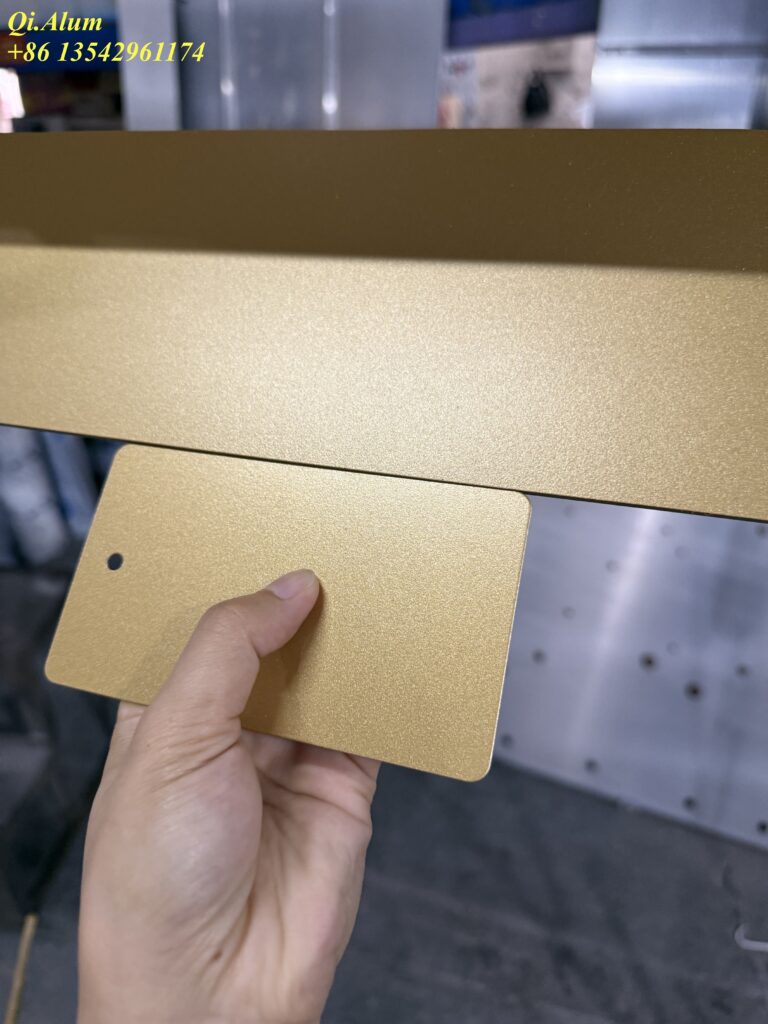
3. Actionable Strategies to Avoid Mismatched Deliveries
To ensure that your bulk order matches your approved golden sample, implement these quality control protocols:
-
Request Detailed Technical Sheets: Do not accept vague descriptions. The contract should clearly state the specific aluminum alloy grade (e.g., AA3003, AA1100), coating type (e.g., PVDF with 70% Kynar 500 resin), and exact coating thickness (e.g., $\ge 40\mu m$).
-
Establish a “Golden Sample” Protocol: Seal an approved sample signed by both parties. This sample serves as the ultimate benchmark for color, gloss, and texture during the final inspection.
-
Third-Party Factory Audits: If possible, arrange for an independent quality assurance agency to inspect the goods at the factory before they are packaged and shipped. Check for flatness, color consistency under standard light sources, and substrate thickness.
-
Require Batch Testing Reports: Demand Mill Test Certificates (MTC) and third-party testing reports for coating adhesion (cross-hatch test), impact resistance, and salt spray resistance for every batch.
Conclusion
Procuring aluminum curtain wall panels requires a balance of vigilance and precise technical specifications. By understanding the common loopholes in thickness measurements and strictly inspecting for surface defects, you can eliminate the risk of receiving mismatched products, ensuring a flawless and durable finish for your architectural projects.
Looking for reliable, premium-grade aluminum curtain wall panels manufactured to strict international standards? Contact our technical team today for certified samples and transparent specification layouts.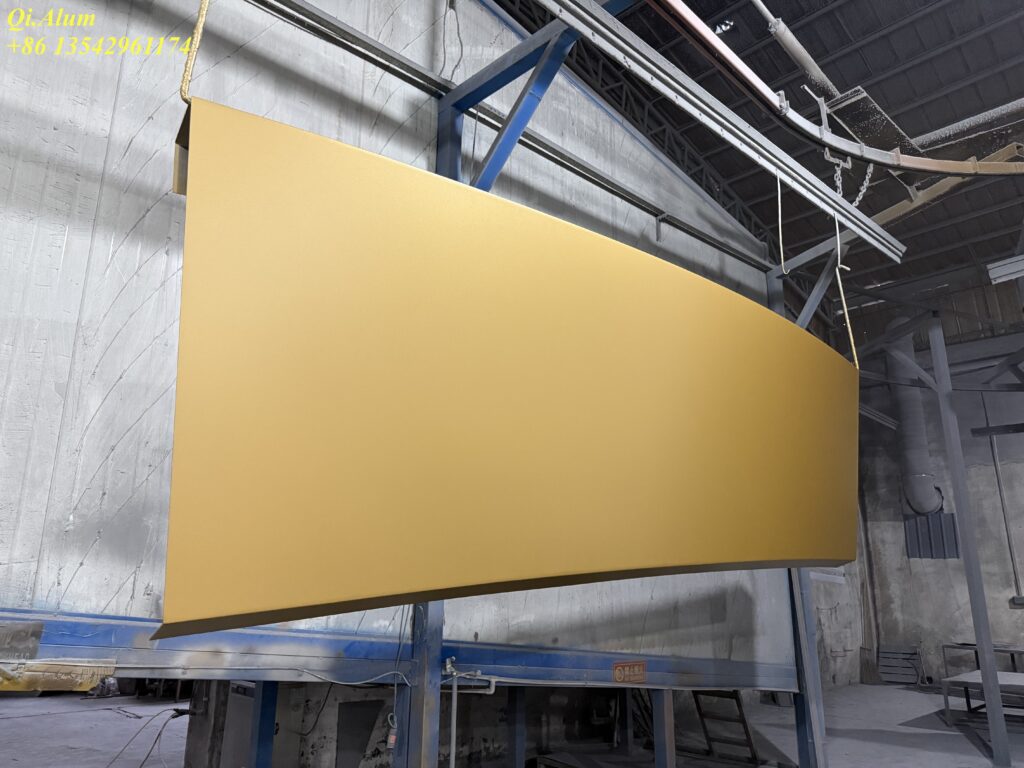

About us:
Foshan Qi Aluminum Decorative Materials Co.,Ltd, more than 12 years experience. We are manufacturer of fabricating aluminum perforated sheets, aluminum solid panels, aluminum screen,aluminum facade decorative sheets, aluminum expanded mesh, aluminum ceiling with good quality and fast delivery for more than 10 years to export countries. Our monthly supplying is about 80000 sqms for inside and outside market. Our projects covers five star hotel, high end villas, school, campus, metro station, airport, office building, shopping mall and some other goverment projects. We can provide design, fabrication and installation one stop service for your projects. High precision, quality guarantee, affordable price, globla delivery and considerate service is our basis. We accept OEM/ODM business. We are the experienced specialist on facade solution decoration!!!