Description
What Is the Best Blade Spacing for Aluminum Facade Grilles?
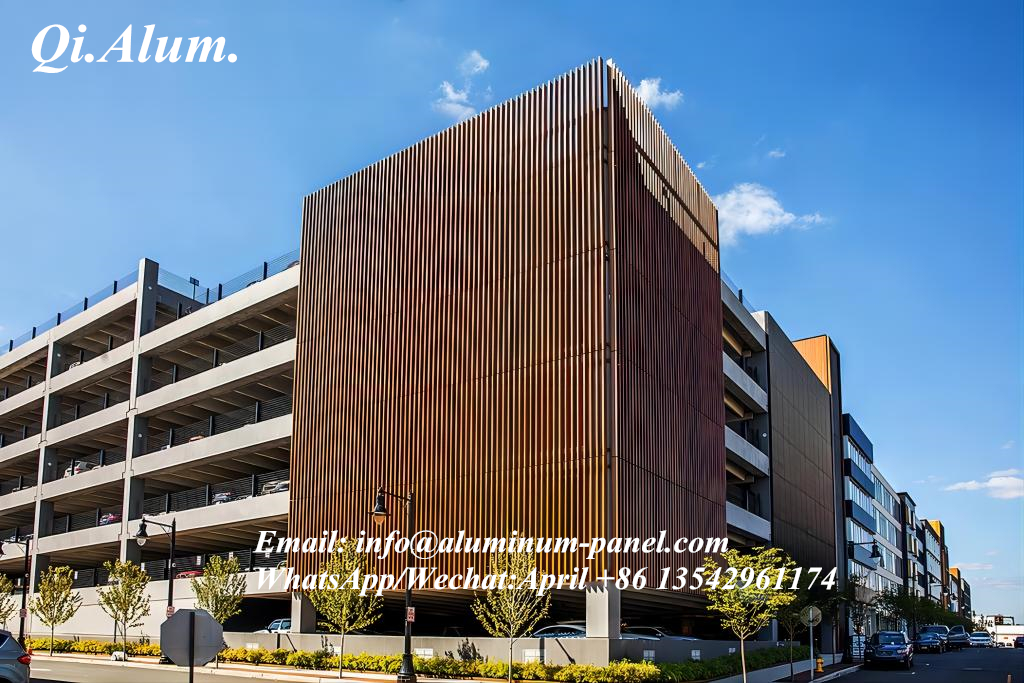
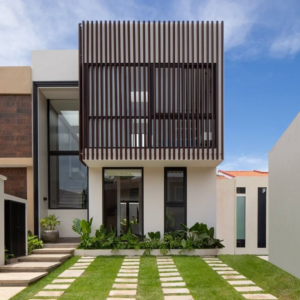
Aluminum facade grilles are widely used in commercial buildings, office towers, residential developments, and architectural screening systems. One important design factor is the spacing between individual grille blades.
The right blade spacing affects the appearance, ventilation, privacy, and solar shading performance of a building facade. However, there is no single spacing dimension suitable for every project. The ideal distance depends on blade width, profile depth, building orientation, and functional requirements.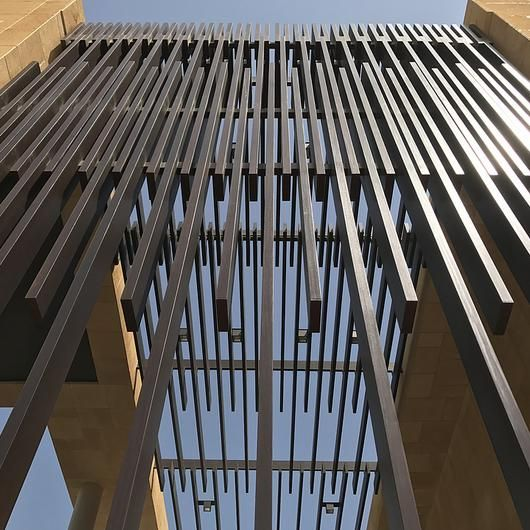
1. How Does Blade Spacing Affect Facade Appearance?
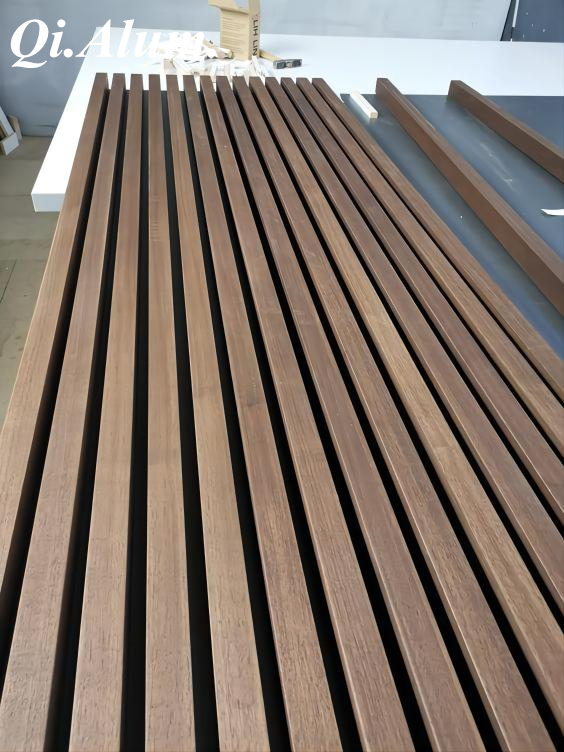
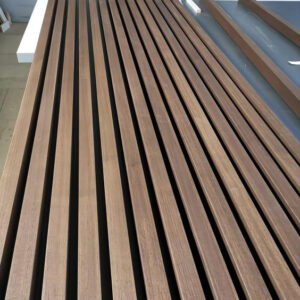
The distance between aluminum grille blades determines how dense or open the facade looks.
- Narrow spacing: Creates a denser appearance and provides greater visual screening.
- Medium spacing: Balances transparency and architectural decoration.
- Wide spacing: Produces a more open appearance and allows greater visibility through the facade.
The relationship between blade width and clear spacing is equally important. Wider blades with narrow gaps create a stronger visual pattern, while slim profiles with larger gaps produce a lighter appearance.
2. What Factors Determine the Best Blade Spacing?
Several factors should be considered when selecting aluminum facade grille spacing.
Blade Width and Depth
Larger aluminum profiles may require different spacing arrangements from narrow profiles to maintain balanced facade proportions.
Building Orientation
East- and west-facing facades may need closer blade arrangements to help control low-angle sunlight.
Ventilation Requirements
For equipment screening and parking structures, the spacing should provide sufficient free area for airflow.
Privacy and Visibility
Residential balconies and service areas may require narrower gaps to reduce direct visibility from outside.
Architectural Design
The spacing should match window dimensions, floor divisions, and the overall building elevation.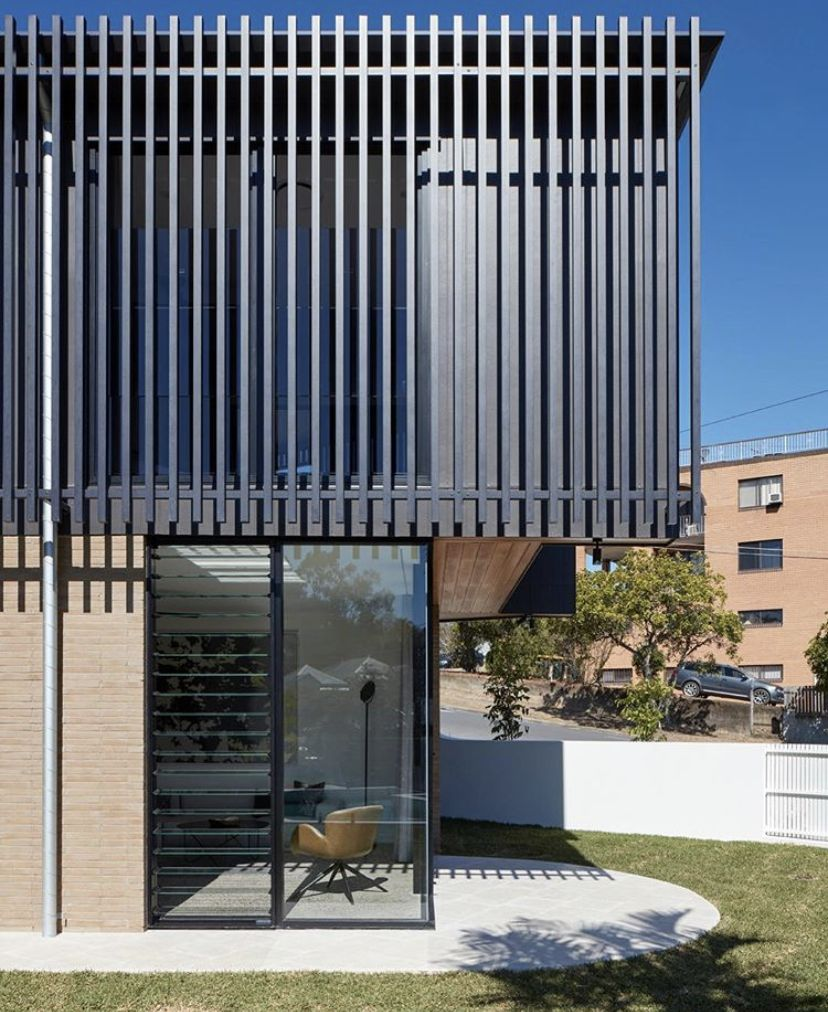
3. Common Blade Spacing Arrangements
Different spacing arrangements create different visual and functional effects.
- Closely spaced blades: Suitable for privacy screening and dense architectural patterns.
- Regular medium spacing: Suitable for general facade decoration and balanced transparency.
- Widely spaced blades: Suitable for open screening and applications requiring greater airflow.
As an initial design exercise, architects can compare several clear-gap options, such as 30 mm, 50 mm, and 80 mm. These are illustrative layout options rather than universal standards. The final dimensions should be determined according to the actual profile and project requirements.
4. How Does Blade Spacing Affect Sun Shading?
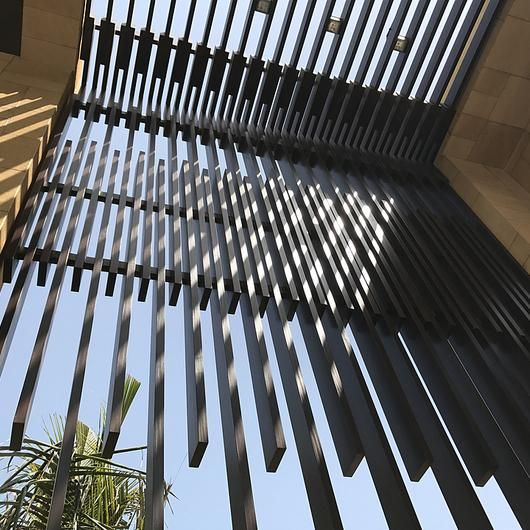
Aluminum facade grilles can reduce direct sunlight reaching windows and exterior walls.
Closely spaced blades generally provide greater screening, while wider gaps allow more sunlight to pass through.
However, shading performance also depends on blade depth, installation angle, facade orientation, and seasonal sun position.
For projects with specific energy-efficiency requirements, solar studies or facade simulations can help determine the appropriate blade arrangement.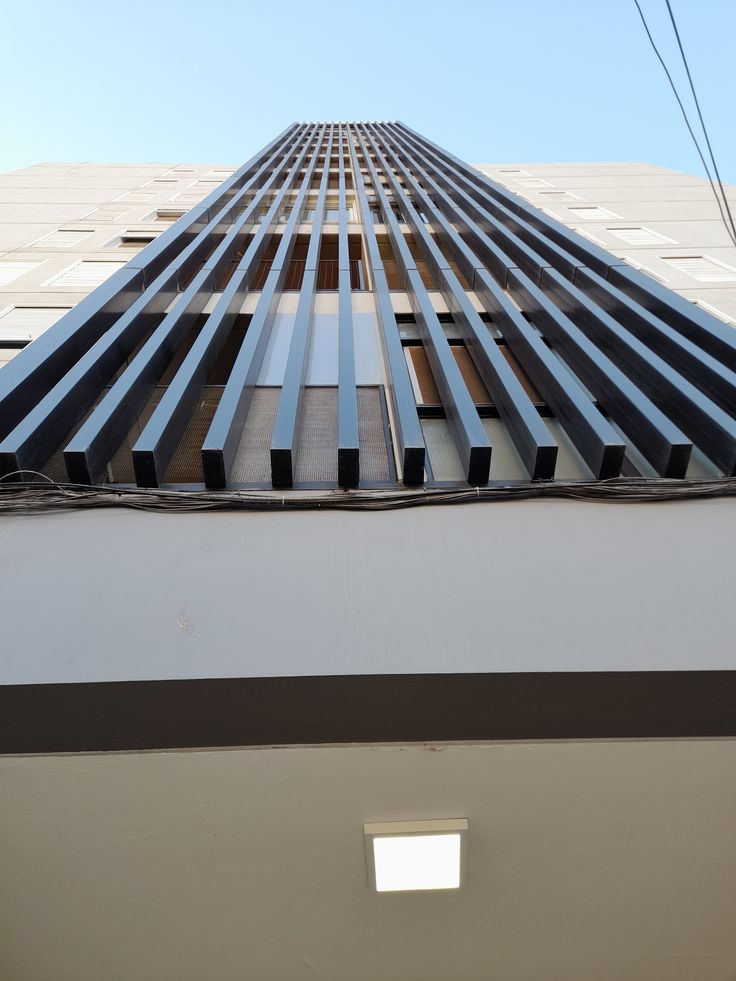
5. How to Maintain Consistent Spacing During Installation
Consistent blade spacing is essential for a neat and professional facade appearance.
Before production, the manufacturer and project team should confirm:
- Aluminum blade width and depth.
- Clear gap between adjacent blades.
- Center-to-center distance.
- Profile length and installation direction.
- Bracket positions and fixing details.
- Supporting frame dimensions.
Accurate shop drawings and sample sections can help prevent spacing variations during fabrication and installation.
For large facade projects, thermal expansion and installation tolerances should also be considered.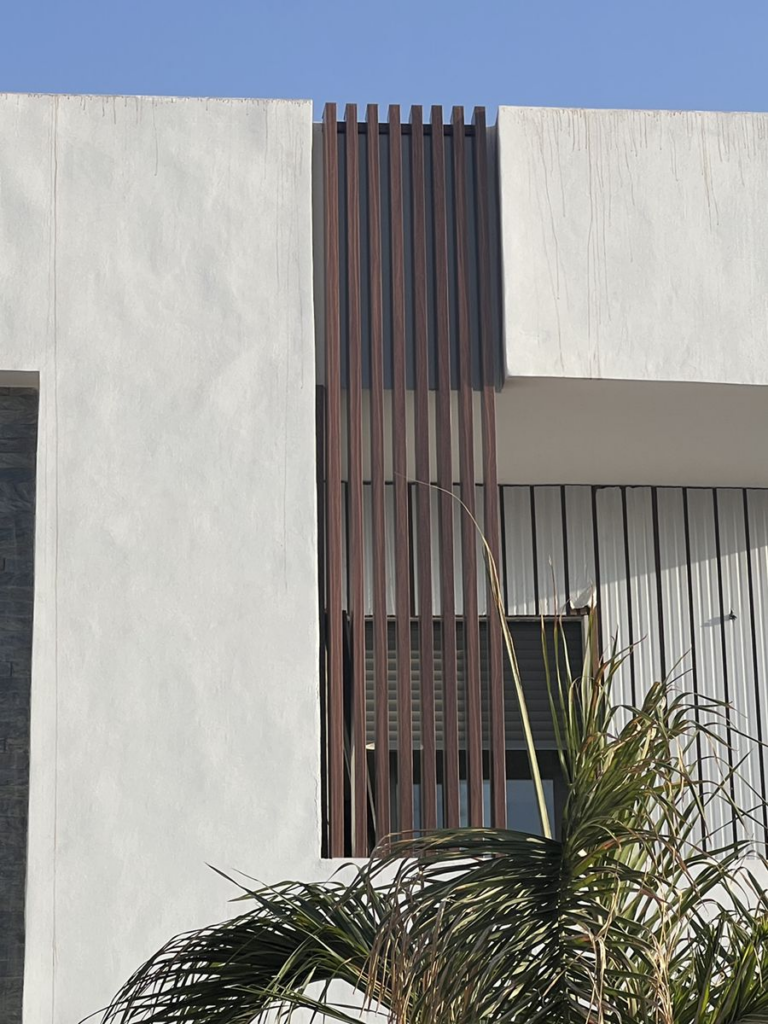
6. Work with an Experienced Aluminum Grille Manufacturer
Selecting the right blade spacing requires coordination between architectural design, profile dimensions, and manufacturing capabilities.
Foshan Qi Aluminum Decorative Materials Co., Ltd. specializes in architectural aluminum products, including aluminum facade grilles, solid panels, perforated panels, curved panels, and shaped aluminum products.
With CNC fabrication, aluminum processing, powder coating, and PVDF coating capabilities, we support architects, contractors, and distributors with technical drawings, samples, and project-based manufacturing solutions.
Conclusion
The best blade spacing for aluminum facade grilles depends on the building’s appearance, shading requirements, ventilation, and privacy needs.
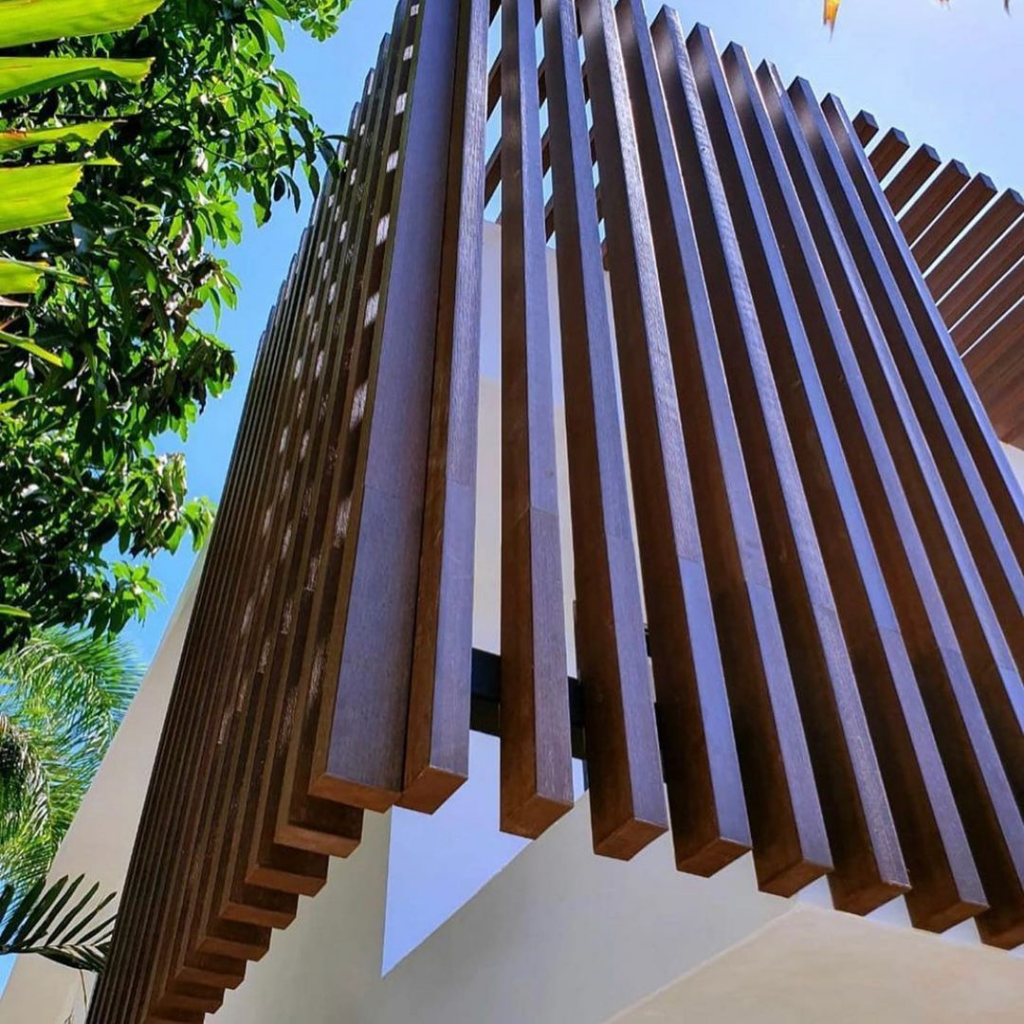
Rather than choosing a standard gap for every project, architects should evaluate blade dimensions, clear spacing, facade orientation, and installation conditions together.

About us:
Foshan Qi Aluminum Decorative Materials Co.,Ltd, more than 12 years experience. We are manufacturer of fabricating aluminum perforated sheets, aluminum solid panels, aluminum screen,aluminum facade decorative sheets, aluminum expanded mesh, aluminum ceiling with good quality and fast delivery for more than 10 years to export countries. Our monthly supplying is about 80000 sqms for inside and outside market. Our projects covers five star hotel, high end villas, school, campus, metro station, airport, office building, shopping mall and some other goverment projects. We can provide design, fabrication and installation one stop service for your projects. High precision, quality guarantee, affordable price, globla delivery and considerate service is our basis. We accept OEM/ODM business. We are the experienced specialist on facade solution decoration!!!